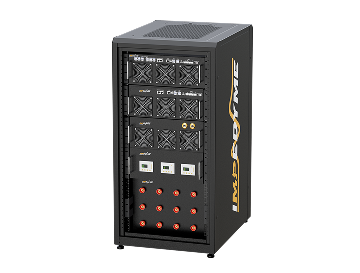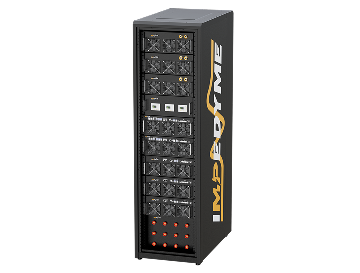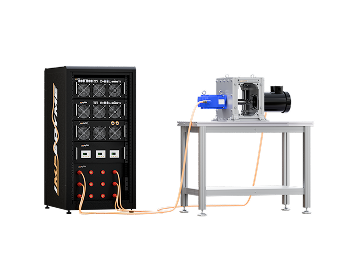

Hardware in the Loop
Hardware in the Loop (HIL) is a real-time validation approach that connects physical control hardware with a high-fidelity simulation of the system it controls. For power electronics, this enables engineers to test controllers for EV inverters, motor drives, power converters, and other complex systems under realistic operating conditions without relying on a complete physical prototype. By simulating electrical grids, dynamic loads, faults, and other challenging scenarios in real time, hardware in the loop testing helps engineers validate control algorithms earlier, identify problems faster, reduce development costs, and improve overall system reliability.
What is Hardware In the Loop Testing for Power Electronics?
硬件在环(HIL)测试是一种先进的验证技术,它将实时仿真与物理控制硬件相结合。通过这种方法,工程师可以在建立完整系统原型之前,在逼真且动态仿真的环境下,对嵌入式控制器(例如用于电动汽车逆变器、电机驱动器和电力变换器的控制器)进行测试。
With Impedyme’s hardware in the loop testing solutions, engineers can simulate electrical grids, dynamic loads, and fault events to validate control algorithms and optimize system behavior early in the design cycle. This early-stage hardware in the loop validation helps save time, reduce development costs, and improve overall product reliability.
HIL Features
- Simulate electrical grids and dynamic loads
- Validate control algorithms in real-time
- Test protection and fault mechanisms safely
- Accelerate development with early-stage HIL testing
HIL Testing Challenges in Power Electronics
High-Speed Control Signals
Modern electric drive ECUs rely on extremely high-frequency control and feedback loops. Conventional HIL testing platforms often struggle to reproduce these rapid digital switching signals, reducing the realism of inverter and motor control validation.
PWM Signal Accuracy
Accurate PWM simulation is vital in hardware in the loop testing. A 25 µs loop reproducing an 8 kHz PWM can cause up to 20% error, while sub-microsecond steps reduce it to under 1%, greatly improving control precision.
Nonlinear Motor Behavior
Real-world electric motors exhibit nonlinear effects such as:
-
磁饱和
-
齿槽转矩
-
磁滞
用于电力电子的 HIL 与 PHIL 测试
Mit der fortschreitenden Elektrifizierung in den Bereichen Automobil, Luft- und Raumfahrt sowie erneuerbare Energien steigt die Komplexität von Testprozessen. Die Hardware-in-the-Loop (HiL)- und Power Hardware-in-the-Loop (PHIL)-Plattformen von Impedyme vereinfachen die Echtzeitvalidierung und beschleunigen die Entwicklung.
Our HIL testing systems combine real-time simulation with embedded controllers, enabling engineers to:
- 嵌入式控制逻辑的快速原型开发
- 极端运行条件的安全仿真
- 保护与故障机制的高保真测试
- 对控制算法进行迭代优化并充满信心地验证其性能
我们的功率硬件在环(PHIL)系统将 HIL 测试扩展至功率领域,通过引入实际电压和电流,实现包括电机驱动器、变换器以及并网逆变器在内的完整系统仿真。

从信号到功率:完整的测试工作流程
电力电子的验证过程通常分为三个关键阶段:

Signal-Level Testing
Simulating the entire system to validate control electronics in a closed-loop environment.

Power-Level Testing
Incorporating a motor emulator to evaluate both control logic and power-stage hardware.

Mechanical/Dynamometer Testing
Final system validation under actual mechanical loads.
基于 FPGA 的实时硬件在环(HIL):更快、更智能、更精确。
Traditional processor-based hardware in the loop (HIL) platforms are often limited to 20–50 kHz due to I/O latency, restricting simulation accuracy. Impedyme’s FPGA-based HIL testing eliminates these bottlenecks by integrating processing and I/O on the same chip, achieving simulation steps as fast as 1 µs.
This next-generation hardware in the loop simulation enables:
- 开关器件的真实实时仿真
- 精细化控制与信号生成
- 与功率级系统的无缝集成
Optimized for Si, SiC, and GaN semiconductor technologies, Impedyme’s FPGA-based HIL testing delivers unmatched performance and accuracy for next-generation power electronics.

统一平台:Impedyme RT + 仿真工具包
1
无缝集成
Tightly integrated hardware and software designed for accurate, low-latency hardware in the loop testing, enabling faster validation and development cycles.
2
Simulation Toolkit
Quickly build and run high-fidelity motor simulations using Impedyme’s precision toolkit, purpose-built for real-time hardware in the loop environments.
3
Scalable & Reliable
Optimized for effortless setup, seamless scaling, and dependable hardware in the loop testing performance across R&D and production test workflows.

Impedyme-RT – Hardware in the Loop Testing Platform
- Impedyme-RT is a real-time, configuration-driven platform for efficient hardware in the loop testing and HIL validation.
- Enables fast transition from simulation to full hardware in the loop (HIL) with reusable test assets.
- Unified hardware in the loop platform with real-time communication, data logging, stimulus generation, and alarm handling.
- Simplifies model-to-hardware integration and supports automated testing in MATLAB® Simulink®.
- Open architecture with plug-ins; supports FPGA-based hardware in the loop systems when combined with Power HIL.
- FPGA-based hardware in the loop testing achieves 1 µs simulation steps with ultra-low latency.
- Parallel processing enables high-fidelity hardware in the loop simulation for high-speed power electronics.

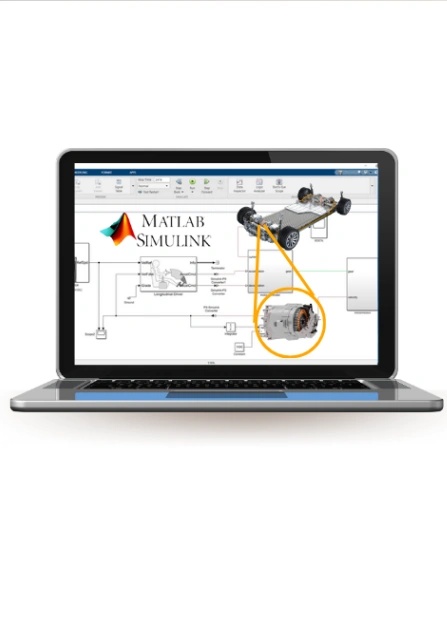



综合 HIL 与功率(CHP)
-
Extends hardware in the loop testing by adding real power flow
-
Validates control logic and power-stage behavior in a true hardware in the loop setup
-
Supports real-world, dynamic operating conditions
Unified Hardware in the Loop Platform
-
Combines simulation and power-level testing in one hardware in the loop solution
-
Enables smooth transition from development to full hardware in the loop testing
-
Connects real devices like inverters, converters, and motor drives
Faster, More Confident Testing
-
Uses FPGA-based hardware in the loop precision
-
Tests under real voltage and current conditions
-
Finds issues earlier and reduces physical prototypes
-
Shortens development time while improving hardware in the loop testing accuracy

The Impedyme Hardware-in-the-Loop (HIL) Testing Workflow
At Impedyme, we’ve designed a hardware-in-the-loop testing (HIL) workflow that transforms how engineers design, test, and validate real-time control systems.
Each stage of our process integrates simulation, real-time execution, and hardware interaction into one seamless loop — reducing risk, development cost, and time to market.

Model & Simulate
Create high-fidelity virtual models using MATLAB/Simulink, Modelica, or Python-based frameworks. Develop and refine control algorithms virtually before any hardware interaction.
- Develop control algorithms virtually
- Visualize system behavior under load
- Prepare models for real-time deployment
01

Deploy to Real-Time Hardware
Deploy your plant model to Impedyme's real-time engine. Our adaptive scheduler guarantees microsecond-level synchronization — no latency, no drift, no uncertainty.
- Real-world speed execution
- Microsecond-level synchronization
- Live simulation environment
02

Connect Physical Controllers
Link your control hardware (ECU, PLC, DSP, microcontroller) through high-speed I/O interfaces. Your controller operates as if in the physical system.
- CAN, LIN, Ethernet, PWM support
- Test production firmware directly
- Replicate extreme fault conditions
03

Test, Validate, Iterate
Explore every scenario — inject faults, simulate failures, run corner cases. Integrated data acquisition enables continuous validation and optimization.
- Real-time signal monitoring
- High-speed data recording
- On-the-fly parameter tuning
04
Industries Empowered by Impedyme Hardware-in-the-Loop (HIL) Testing
Across every high-performance engineering field, 硬件在环(HIL)测试 (HIL testing) is redefining how complex systems are developed, validated, and deployed.
Impedyme provides the flexibility, accuracy, and scalability required by industries where real-time performance, safety, and compliance are non-negotiable.
1
Automotive & Electric Vehicles (EVs)
Impedyme’s HIL testing enables automotive engineers to validate and optimize electric powertrains, ADAS systems, and control software safely before road testing.
2
Aerospace & Avionics
By simulating flight dynamics and control responses, Impedyme ensures flawless performance and safety across avionics and flight control systems.
3
Energy & Power Systems
Impedyme’s real-time HIL solutions allow energy innovators to test grid stability, converter control, and microgrid protection with precision.
4
Industrial Automation & Robotics
Manufacturers use Impedyme’s HIL platforms to validate motion control, robotic logic, and safety interlocks before deployment on factory floors.
5
Marine & Offshore Systems
From propulsion control to dynamic positioning, Impedyme’s HIL testing enhances reliability and safety in demanding maritime environments.
6
Rail & Transportation Infrastructure
Impedyme empowers engineers to simulate and verify train control, braking systems, and signaling networks under real-world operational conditions.
Impedyme vs. Traditional HIL Approaches
| 功能 | Traditional Vendors | Impedyme 优势 |
|---|---|---|
| Integration | Limited to proprietary ecosystems | Works seamlessly with MATLAB/Simulink |
| 可扩展性 | Fixed configurations | Modular hardware and scalable simulation clusters |
| Performance | Fixed real-time cycles | Adaptive scheduling with sub-millisecond accuracy |
| Accessibility | Requires experts | Intuitive UI for engineers and researchers alike |
| Support | Hardware-focused | End-to-end workflow support from model to validation |
常见问题
Ready to Accelerate Hardware in the Loop Testing?
Validate controllers, power electronics, and protection logic with Impedyme’s real-time hardware in the loop testing platform—delivering faster development, safer validation, and higher fidelity results from day one.