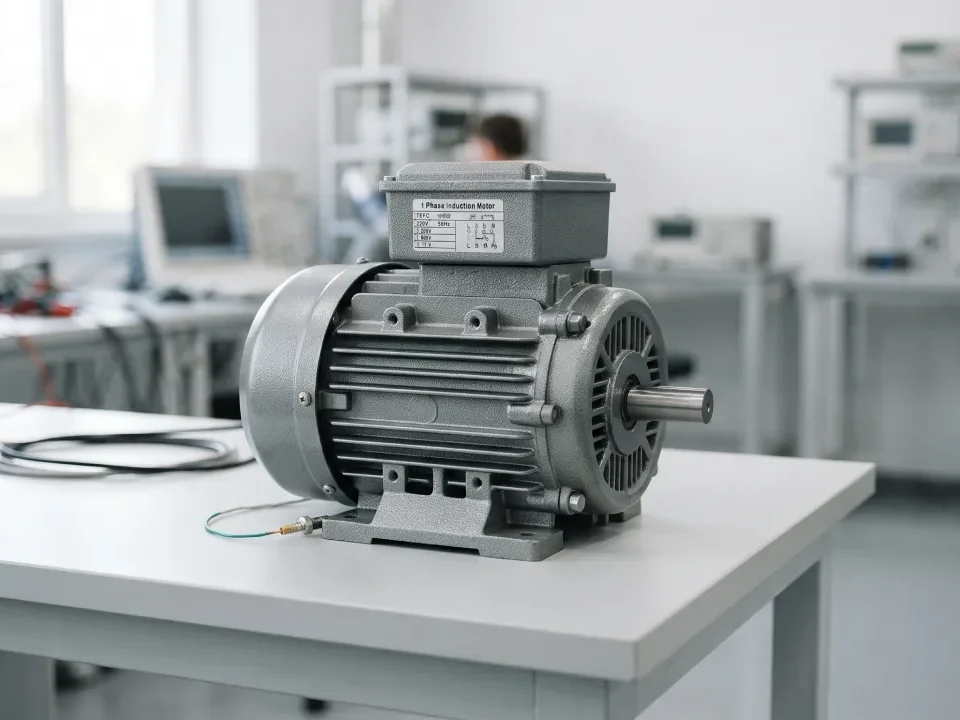
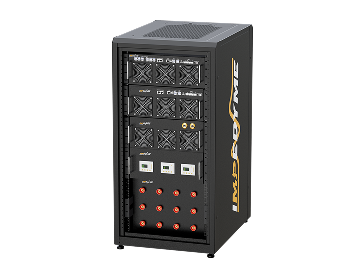
用于逆变器硬件开发的电机仿真器
开发用于电气化交通的高性能逆变器硬件,需要在逼真的环境中进行严格验证。 在 Impedyme,我们提供先进的电机仿真工具,帮助工程师模拟真实工况,加速开发周期。 我们的电机仿真器系统在研发各个阶段的测试中,提供无与伦比的精度与效率。
为什么早期逆变器硬件设计需要电机仿真
逆变器硬件是电动汽车的核心,负责直流/交流转换, 电机控制,以及能量优化。然而,在开发早期阶段的测试中,往往依赖被动的 R-L 负载,这在未使用电机仿真时会带来关键限制: 有限的器件应力:被动负载仅对逆变器施加无功功率,无法模拟真实的有功功率工况。这导致无法对二极管、开关等元件进行准确测试,从而可能隐藏潜在的可靠性问题。 无效的直流通路:被动 R-L 负载无法将能量回馈至逆变器的直流侧,限制了对真实功率流动特性的再现能力。
使用 Impedyme CHP 电机仿真器进行功率级测试
Impedyme CHP 电机仿真器是一款有源、可编程系统,专为精确的逆变器硬件测试而设计。 它能够在真实的电压和电流条件下实现功能验证,比传统的感性负载测试环境更具真实性和细节表现。我们的电机仿真平台面向现代电驱动系统设计,确保测试结果的高精度与高可靠性。

使用 RCP Box 实现低功率信号级电机仿真
逆变器开发的早期阶段通常伴随着较高的不确定性。 Impedyme RCP Box 提供信号级电机仿真功能,使您能够在无需修改控制器硬件的情况下,利用高保真实时仿真进行测试——而无需承担物理元件受损的风险。
快速被测单元(UUT)调试:只需定义四个参数即可开始测试,轻松完成测试配置。
快速参数调整:在运行过程中,可通过简单的鼠标点击轻松快速地调整多个参数,例如电阻 𝑅 和电感 𝐿。
最低场地要求:系统仅需一条 5 kW 的交流电源连接即可运行,无需水冷连接,因为该系统采用独立的液冷设计,无需外部冷却机。
真实功率仿真:四象限模式支持全转矩/全速度运行,可在逼真的工况下进行有功功率测试。
从信号到功率的电机仿真测试平台:通过 Impedyme 集成的 RCP 与 CHP 系统,工程师可以在信号级验证控制逻辑,并无缝扩展至高功率测试——全部在同一统一平台中完成。 在整个开发周期内,确保完整的可追溯性与卓越的性能表现。

Impedyme 电机仿真器是否可同时用于低功率和高功率测试?
是的。Impedyme 电机仿真器同时支持信号级测试(通过实时控制原型开发系统 RCP Box 实现)以及基于 的高功率硬件仿真。 CHP 系统。这种灵活的架构使工程师能够借助统一的电机仿真平台,从概念设计到量产阶段实现开发流程的高效贯通。
选择投资 Impedyme 电机仿真器,加速逆变器开发进程,提升测试精度,并让您的电气化交通产品更快推向市场——在性能与可靠性方面尽享充分信心。

Motor Emulator Testing Platform from Signal to Power
With Impedyme's integrated HIL/RCP Box and CHP systems, engineers can validate control logic at the signal level and scale seamlessly to high-power testing, all within one unified motor emulation platform. The same motor models and test cases carry forward from one stage to the next, which gives you full traceability and uncompromised performance throughout the development cycle.
开发阶段 Impedyme Tool What You Validate
Concept and control design HIL/ RCP box (signal level) Control algorithms, protection logic, firmware
Controller hardware integration HIL/ RCP box (signal level) Unmodified controller hardware against a real-time motor model
Power stage bring-up CHP motor emulator (power level) Switching behavior, current control under real voltage and current
Full validation CHP motor emulator (power level) Full torque-speed range, regeneration, fault handling, component stress
This approach fits naturally into a wider hardware-in-the-loop strategy and complements the full inverter test workflow, so motor emulation becomes one connected step rather than an isolated bench.
Who Uses Motor Emulation?
Impedyme's motor emulator platform serves teams that need realistic inverter testing without the cost and risk of rotating test benches:
- EV traction inverter developers validating drive inverters across the full vehicle operating range
- Industrial drive manufacturers testing variable-speed drives against different motor designs
- eVTOL and electric aircraft teams validating propulsion inverters where safety margins are critical
- Tier-1 suppliers and test labs that need repeatable, high-throughput validation for multiple customer programs
Passive Load vs Active Load vs Motor Emulator: Choosing the Right Fidelity Level
Inverter testing does not have to start with a motor emulator. Many teams begin with a passive load, move to an active load, and step up to motor emulation once the control system is involved. Each option sits at a different fidelity level. Knowing what each one can and cannot reproduce helps you choose the right tool for each stage of your test program.
被动负载
一个 无源负载 is a resistive load bank, sometimes combined with inductors, connected to the inverter's output. It absorbs the inverter's power and converts it into heat.
Passive loads are simple, low-cost and useful for:
- Basic power-up checks
- Burn-in testing
- Simple thermal soak tests
The limitation: a passive load has fixed electrical behavior. It cannot reproduce the back-EMF of a spinning motor, speed-dependent behavior, or the fast load changes a motor creates during acceleration and braking. It does not provide the dynamic load needed to properly test the inverter's switches, and because all the energy ends up as heat, it also adds cooling demand to the test cell.
主动负载
一个 有源负载 is an electronically controlled load that regulates how much current the inverter delivers. It is a clear step up from a passive load. You can set and change the load level, and you can load the inverter's switches hard enough to generate realistic heat at their junction points, which makes it useful for thermal and current-rating checks.
The limitation: an active load usually controls the level of current, most often the average or RMS value, rather than the exact shape of the current waveform. The waveform it produces may not match what a real motor would draw, including the ripple, phase relationships and transient behavior that the inverter's current controller responds to. An active load is a good tool for power and thermal stress, but it is not a substitute for a real motor when you are testing control behavior.
电机仿真器
一个 电机仿真器 reproduces the full electrical behavior of a motor at the inverter's terminals. A real-time motor model calculates the current a real machine would draw at every instant, and the emulator's power stage forces exactly that current, including back-EMF, saliency, saturation and load-torque effects.
Once the inverter's control system is part of the test, this precision becomes essential. To replace a real motor or dynamometer, the emulator's current must change faster than the inverter or controller samples it. When it does, the controller sees the same response it would see from a real machine, and its control loops behave exactly as they will in the final application.
Impedyme's FPGA-based CHP motor emulator is built for this level of fidelity.
Fidelity Level Comparison
功能 被动负载 主动负载 电机仿真器
工作原理 Resistive (or resistive-inductive) load bank Electronically controlled current level Real-time motor model drives the exact motor current
Current waveform accuracy Fixed by load impedance Average or RMS controlled; waveform may not be correct Matches the real motor waveform
Dynamic load behavior 无 有限 Full motor dynamics, including back-EMF and transients
Stress on inverter switches Low, not representative Realistic heat at junction points Realistic electrical and thermal stress
Control system testing No 有限 Yes; replaces motor and dynamometer
Fault testing 极其有限 有限 Simple, safe and reproducible
能量处理 Converted to heat Depends on the load Four-quadrant operation, including regeneration
典型用途 Power-up, burn-in, thermal soak Power and thermal stress tests Full inverter and control validation
Accelerate Inverter Development with the Impedyme Motor Emulator
Invest in the Impedyme motor emulator to accelerate inverter development, increase testing precision, and bring your electric mobility products to market faster, with full confidence in performance and reliability. By replacing passive loads and reducing reliance on dynamometers, you can start testing earlier, test more scenarios, and find problems while they are still easy to fix.
常见问题
Ready to Validate Your Inverter with a Motor Emulator Instead of a Dyno?
Discover how the Impedyme motor emulator delivers realistic power testing, faster commissioning, and safe fault validation.