Impedyme FPGA Scope

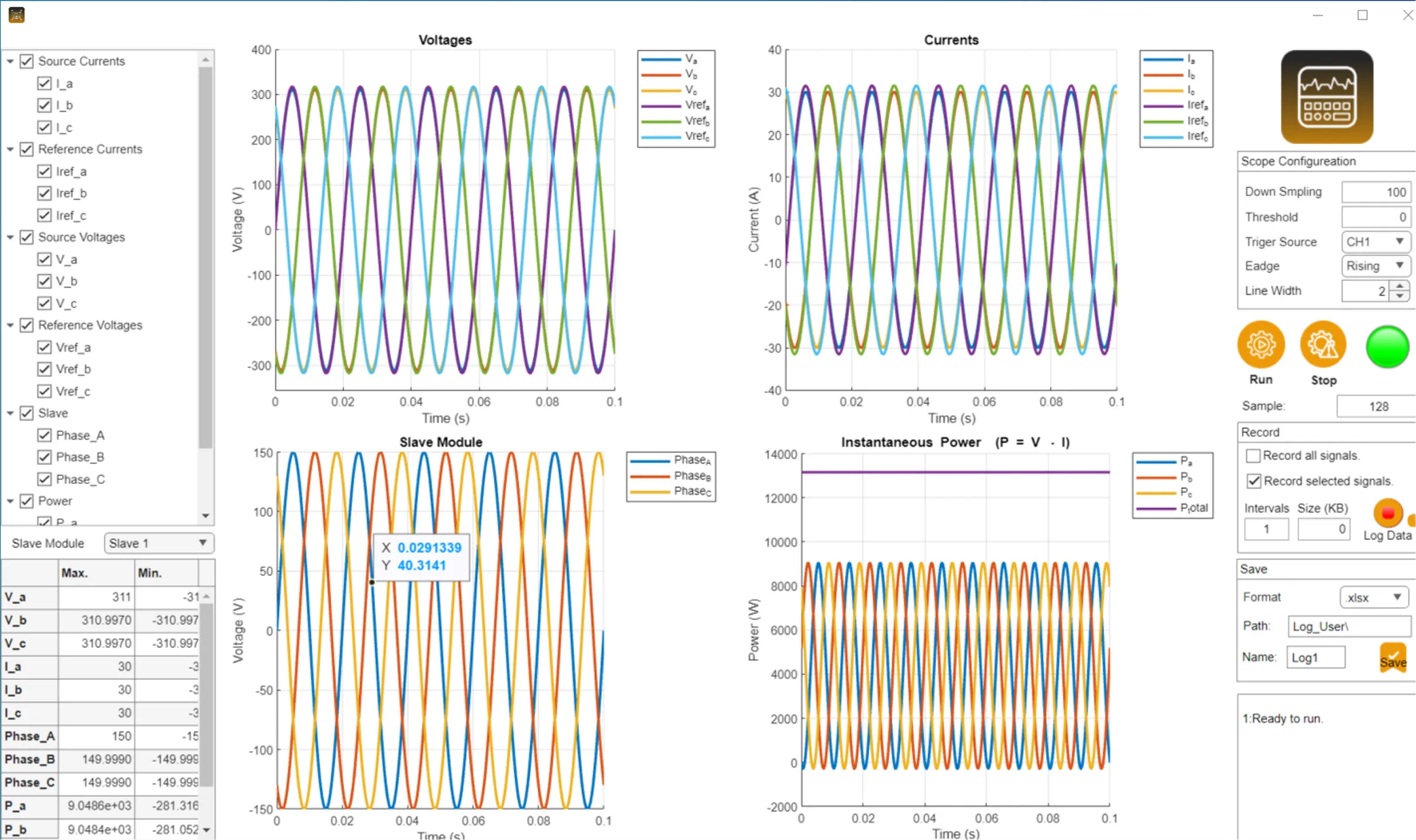
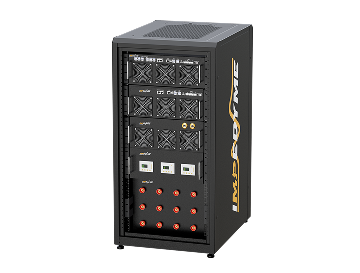
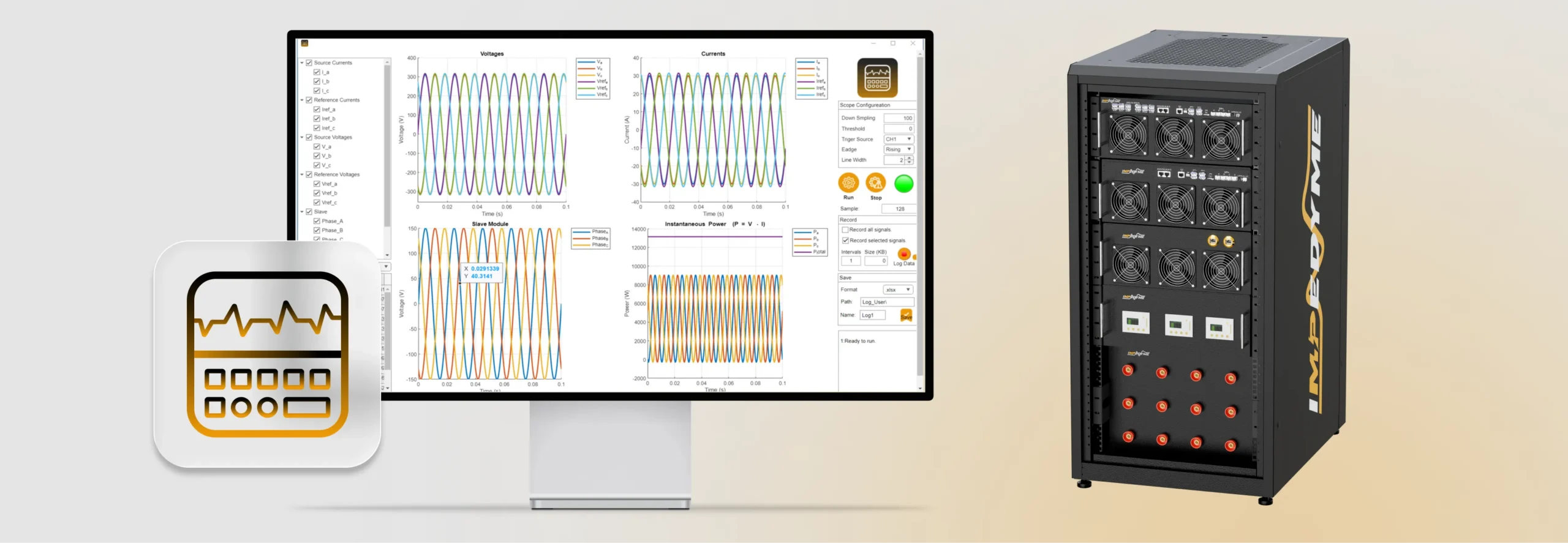
系统 Impedyme FPGA Scope is a built-in, high-speed signal visualization and diagnostics tool engineered specifically for Impedyme’s CHP Series real-time simulation platforms. Deeply integrated into Impedyme’s FPGA-centric real-time control and signal-processing architecture, the FPGA Scope enables engineers to monitor, trigger, and analyze critical electrical and control signals with sub-microsecond resolution — all without external oscilloscopes or DAQ hardware.

This tight FPGA integration makes the Impedyme FPGA Scope a core differentiator for advanced 电力硬件在环(PHIL), Controller HIL, and grid-compliance validation workflows.


Purpose and Use Case

In modern HIL and PHIL testing environments, engineers face increasing system complexity, higher switching frequencies, and stricter compliance requirements. Traditional software-based scopes or external instruments often fail to capture true real-time behavior.The Impedyme FPGA Scope is purpose-built to address these challenges by allowing engineers to:

1

Observe internal system states (Id/Iq, Vabc, Vdq, controller states, integrator outputs)

2

Validate timing-critical signals (PWM edges, PLL lock behavior, fault logic response)

3

Troubleshoot control algorithm performance in real time

4

Analyze transient events, fault ride-through, and grid disturbances

Engineering Challenges Solved by Impedyme FPGA Scope

Modern power electronics and real-time simulation environments introduce engineering challenges that traditional measurement and debugging tools struggle to address. The Impedyme FPGA Scope is specifically designed to solve these problems by providing deterministic, FPGA-level visibility into fast, timing-critical systems. Below are the most common engineering challenges and how Impedyme’s FPGA Scope overcomes them.

Architecture Overview

The FPGA Scope is not a post-processing tool — it is embedded directly inside the real-time signal path on the FPGA/DSP hardware used for simulation and control. This offers several advantages:

功能优势
Zero-latency captureObserves waveforms directly from FPGA buses and DSP registers
High-speed samplingCapable of sampling at hundreds of kHz to MHz range
Trigger-based acquisitionCapture events around overvoltage, current spikes, PWM changes
Non-intrusive observationNo performance loss, unlike traditional CPU-based visualization

User Interface Features

Channel Selection

Up to 16 simultaneous signal channels

Select from:

  • Voltages (Va, Vb, Vc, Vdq)
  • Currents (Ia, Ib, Ic, Idq)
  • PLL outputs, PWM signals
  • Grid Impedance Model outputs
  • Controller states (e.g., PI outputs, integrator states)
Signal Scaling & Units
  • Automatic unit handling (e.g., V, A, pu)
  • Y-axis scaling auto-adjusts or can be manually fixed
Trigger and Timing Control

Define trigger condition:

  • Rising/Falling edge
  • Value threshold
  • Signal match

Adjustable time window:

  • View pre-trigger and post-trigger waveforms
  • Useful for detecting transient faults or instability
Live Mode and Snapshot Mode
  • Live Mode: Continuous real-time updating for dynamic observation
  • Snapshot Mode: Freeze on trigger for post-event analysis
Cursor and Zoom Tools
  • Zoom in on high-frequency events
  • Compare time intervals between peaks
  • Use crosshairs for signal magnitude/time measurement

Application Examples

Using FPGA Scope for Grid Code Compliance & Certification Testing

In modern power systems, grid code compliance and certification testing are critical for inverters, converters, and other distributed energy resources. Meeting standards such as IEEE 1547, UL 1741, and IEC 61850LVRT/HVRT requirements, demands precise, deterministic measurement of electrical signals under real-time conditions. The Impedyme FPGA Scope provides the high-resolution, hardware-integrated visibility necessary for these tests.

Key Advantages


功能优势
Fully FPGA-integratedTrue real-time scope capture; no CPU lag
High-Speed & High ResolutionCaptures detailed waveform dynamics
Trigger-Based EventsCapture specific faults, overshoots, or disturbances
Multichannel ViewOverlay voltage, current, and control signals
Export-ReadyGenerate test reports instantly
Safe and IsolatedEliminates need for physical probes on high-voltage hardware

Performance Capabilities of Impedyme FPGA Scope

系统 Impedyme FPGA Scope is engineered to meet the stringent performance demands of modern power electronics, real-time simulation, and PHIL/HIL testing. Its capabilities are defined not just by features, but by measurable, deterministic performance metrics that engineers can rely on during validation, debugging, and certification workflows.

Below is a clear breakdown of the key performance characteristics that set the Impedyme FPGA Scope apart.


How many signal channels can I monitor simultaneously?
Up to 16 simultaneous channels. You can monitor voltages (Va, Vb, Vc, Vdq), currents (Ia, Ib, Ic, Idq), PLL outputs, PWM signals, grid impedance model outputs, and internal controller states such as PI outputs and integrator states — all at once.
How does the tool help with control looping tuning?
FPGA Scope gives you direct access to internal controller states including PI outputs, integrators, and limit signals. You can compare reference versus feedback signals in real time and see the effect of gain changes immediately — significantly reducing tuning iterations and helping diagnose instability caused by saturation or integrator windup.
Can it be used for PHIL system debugging?
Yes. The FPGA Scope is particularly valuable in PHIL setups, where it helps identify instability sources by providing synchronized visibility into voltage, current, and impedance interactions between real hardware and simulated systems.
What kind of switching frequencies can it handle?
The FPGA Scope is designed to accurately observe high-frequency switching behavior, including systems using SiC and GaN devices, making it suitable for modern high-speed power converters.
How does it improve test repeatability?
Because all signals are captured within the same deterministic FPGA clock domain, measurements are perfectly synchronized and repeatable. This is critical for validation, certification, and audit processes.

产品