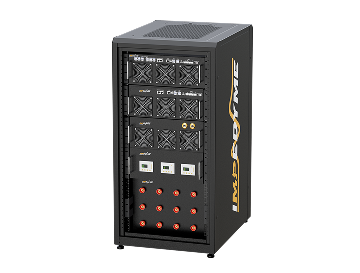

Accelerating Power Electronics Innovation with MATLAB & Simulink Integration
The Simulink Blockset in Power HIL Studio is designed to bring your model-based design directly into the real world. Instead of running simulations only on your computer, you can now deploy Simulink models instantly to real-time hardware and validate your algorithms with actual grid and motor emulation systems. This integration is built for engineers developing next-generation power electronics, from renewable energy inverters to electric vehicle drives.
At the core, the blockset connects MATLAB/Simulink with FPGA-based real-time simulation hardware, enabling a seamless workflow between design, prototyping, and validation.
What is the Simulink Blockset?
The Simulink Blockset acts as a direct interface between your Simulink models and the Power HIL Studio environment. With just a few steps, you can:
- Import a model designed in Simulink.
- Deploy it to the real-time simulation engine (FPGA or CPU).
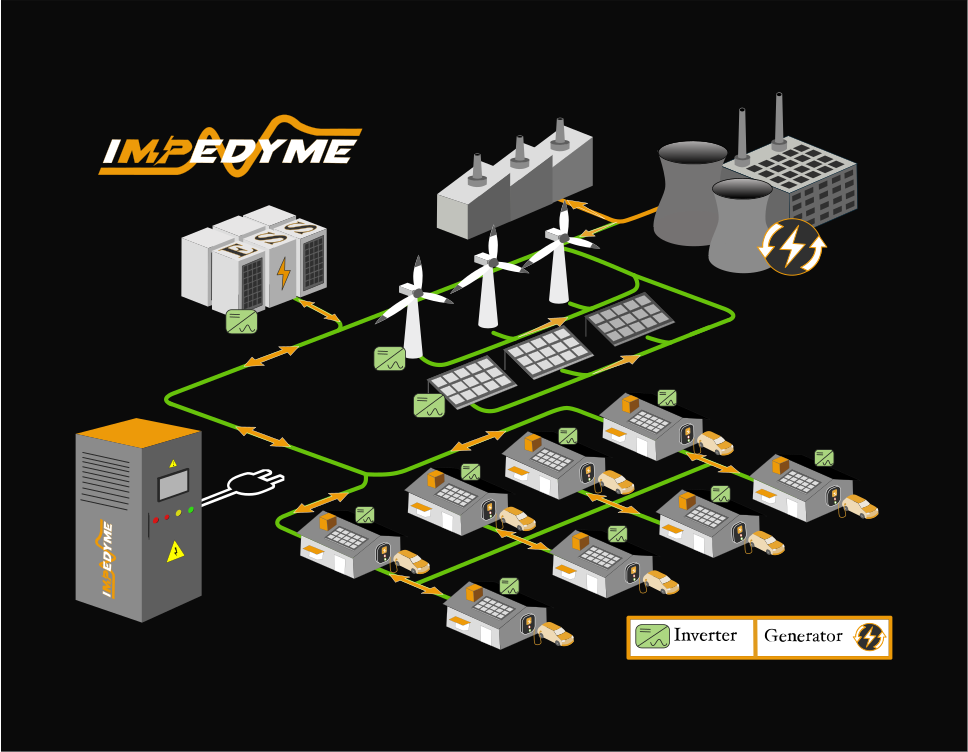
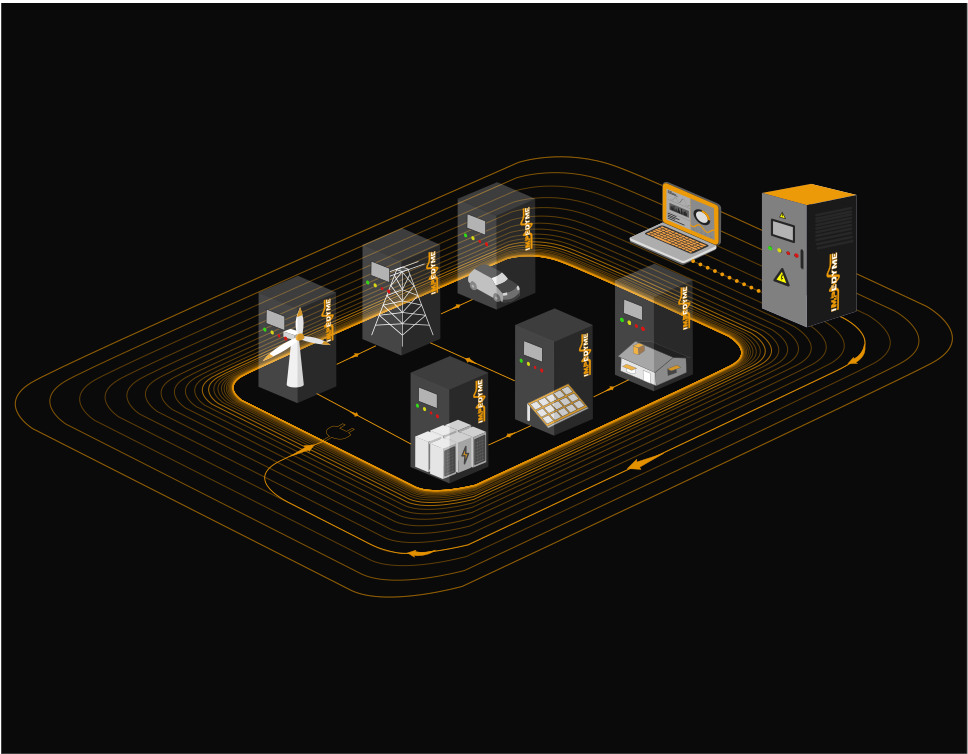
- Run your control strategies on actual hardware emulators such as grid emulators, motor emulators, battery emulators, or inverter test benches.
- Tune parameters, trigger events, and capture data while the simulation is running.
This eliminates the traditional gap between software-only simulations and hardware testing, giving engineers the ability to validate systems with unmatched speed and confidence.

Powerful Features for Professional Development
Everything you need to bridge simulation and reality

Direct
Deployment
Seamlessly connect your Simulink models to real-time hardware
- Import Simulink models directly
- Deploy instantly to FPGA or CPU engines
- No manual coding required

Real-Time
Tuning
Modify parameters dynamically while your system is running
- Adjust parameters live while running
- Apply changes without stopping
- Test multiple scenarios on the fly

Automated
Testing
Run comprehensive test suites with automated workflows
- Run parameter sweeps and loops
- Trigger events and conditions
- Capture and export results for reports

Advanced
Power
Emulation
Sophisticated power electronics modeling and emulation
- AC or DC operation modes
- Add harmonics and impedance models
- Configure protection and relay settings
How the Simulink Blockset Fits Into the Model-Based Design Workflow
The Simulink Blockset integrates directly into the model-based design workflow, allowing engineers to model systems in MATLAB/Simulink, deploy them instantly to FPGA or CPU-based real-time hardware, and validate performance on grid, motor, inverter, or battery emulators. This seamless flow from simulation to hardware testing enables real-world validation, safe fault injection, live parameter tuning, and automated testing—accelerating development of advanced power electronics, renewable energy systems, and electric vehicle drives.
Why Engineers Choose the Simulink Blockset
FPGA-Based Real-Time Simulation
- Ultra-fast emulation with FPGA precision
- Deterministic execution for complex systems
- Reliable hardware-in-the-loop performance
Regenerative Power Stages
- Energy-efficient testing with regenerative hardware
- Supports bidirectional power flow
- Safe for continuous real-world validation
Advanced Fault Injection
- Inject grid faults, switching events, and anomalies
- Validate system protection and stability
- Minimize risk of hardware damage
Seamless MATLAB/Simulink Integration
- Direct workflow from Simulink to hardware
- Real-time tuning and automation via MATLAB
- No manual coding steps required
How PowerHIL Studio Works
- Setting/Starting Application Specific Apps for Grid Emulator, Motor Emulator, Battery Emulator, Impedance Analyzer and more
- Build Test Scenarios via GUI or import from Simulink.
- Select Modes: EMC standard profiles or PHIL/HIL simulation.
- Execute Tests with on-the-fly parameter tuning and fault injection.
- Analyze Results with automated logging, FPGA scope, and reporting tools.
Simulink Blockset for Real-Time Hardware-in-the-Loop Testing
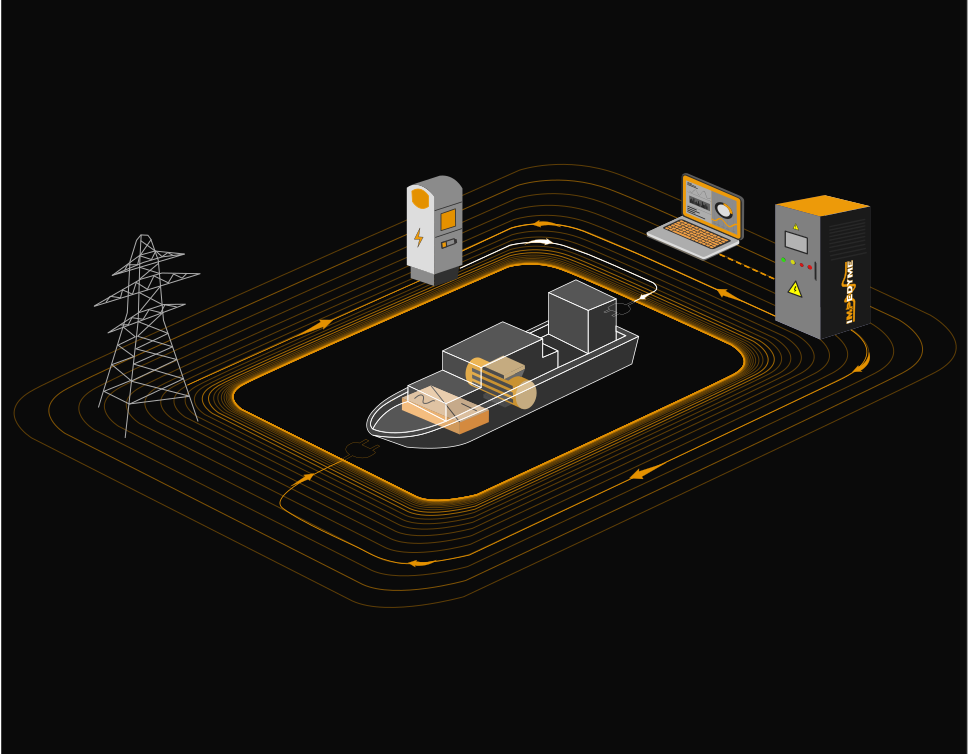
Hardware-in-the-Loop (HIL) testing is one of the most powerful applications of the Simulink Blockset in Power HIL Studio. Instead of waiting until a physical prototype is available, engineers can connect their Simulink-based control algorithms directly to real-time emulation hardware to validate performance under real operating conditions. This approach enables early-stage verification and faster troubleshooting while significantly reducing development costs and risks.
With real-time HIL testing, your controller operates as if it were connected to real hardware, but the plant and environment models are emulated on FPGA or CPU-based systems with microsecond-level precision.
Key Benefits of Real-Time HIL with Simulink Blockset
-
Prototype-Free Validation: Test control systems without needing a fully built hardware prototype.
-
Safe Fault Injection: Introduce grid fluctuations, inverter faults, or battery anomalies without risking damage to equipment.
-
Accelerated Development: Validate designs in parallel with hardware development to shorten design cycles.
-
Repeatable Scenarios: Run identical test conditions multiple times for robust analysis and regression testing.
-
Realistic Response: Experience the same timing and dynamics as physical systems due to FPGA-level determinism.


Conclusion
The Simulink Blockset for Power HIL Studio is more than a software add-on—it’s a bridge between simulation and reality. By combining the flexibility of MATLAB/Simulink with the accuracy of FPGA-powered emulation hardware, engineers can validate complex power electronic systems in real-time, test fault scenarios safely, and optimize designs faster than ever.