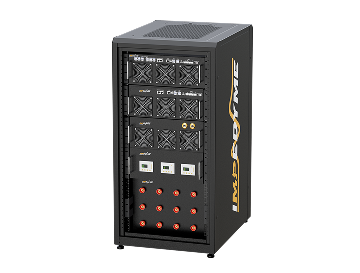

Combined Hardware-in-the-Loop and Power (CHP) Testbench
Power-Hardware-In-the-Loop (PHIL) Challenges
Power Hardware in the Loop (PHIL) testing expands HIL testing by enabling real power exchange between simulators and hardware, but it brings challenges in stability, signal accuracy, interface compatibility, and safety that require precise calibration and robust system design.

Combined HIL and PHIL (CHP)
Impedyme's All-In-One Solutions
Impedyme’s combined HIL testing and PHIL solutions are purpose-built to address these complexities, delivering a reliable and efficient platform for advanced power system validation. The integrated approach not only ensures technical excellence but also provides cost benefits—making it an ideal choice for R&D labs and educational institutions.

Modular & Scalable Power
Integrated with MATLAB Simulink®, the test system offers flexible test editing functions to perform independent channel tests and conforms to various requirements for testing

Stand-Alone Liquid-Cooled Technology
Impedyme’s liquid-cooled technology provides powerful, efficient cooling for high-power PHIL test systems in a compact design. It improves performance, saves space, and is easy to integrate into new or existing setups.

Performance-Enhancing Features
-
Targeted Cooling: Keeps modules stable at ultra-high frequencies.
-
Reliability: Reduces thermal stress for longer device life.
-
Low Noise: Liquid cooling eliminates loud fans.


Impedyme’s High-Performance Real-Time Distributed Simulators
Impedyme’s High-Performance Real-Time Distributed Simulators deliver unmatched computational power and precision, enabling scalable, high-fidelity simulations for Power Hardware in the Loop (PHIL) and HIL Testing applications. Designed to meet the demanding real-time simulation requirements of power electronics, smart grids, and complex electromechanical systems, these simulators provide exceptional speed, accuracy, and scalability.

The real-time distributed simulators are designed for direct integration with Impedyme's PHIL and HIL platforms, enabling:
- Closed-Loop Testing: Connects physical power converters, inverters, and controllers with real-time simulated environments.
- High-Fidelity Model Execution: Supports detailed electrical, thermal, and electromechanical models for precise hardware interaction.
- Multi-Domain Simulation: Simultaneously simulates power electronics, motor drives, grid systems, and communication networks in real time.
Impedyme Solutions:From Rapid Control Prototyping to Product Prototyping
Impedyme’s Combined HIL and Power (CHP) Testbench provides a unified, high-performance environment for transitioning seamlessly from Rapid Control Prototyping (RCP) to Rapid Product Prototyping (RPP). By merging HIL testing with PHIL capabilities, Impedyme accelerates system design, validation, and deployment—reducing time-to-market while ensuring reliability and scalability.

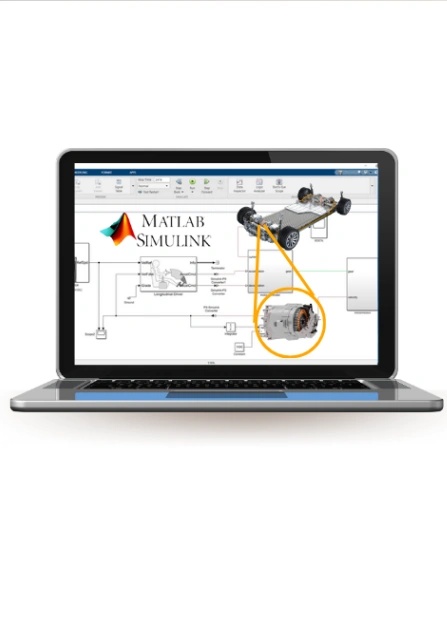



Power Hardware-in-the-Loop (Power HIL) with Impedyme
Power Hardware in the Loop (PHIL) connects real electrical hardware—such as inverters, converters, motor emulators , and batteries—to a real-time digital simulation via a regenerative power interface. This approach lets you validate designs safely, accelerate development, and reduce costs by testing under realistic operating and fault conditions without waiting for prototypes or exposing equipment to risk.
At Impedyme, our PHIL solutions combine high-fidelity real-time simulation, flexible power amplifiers, and open connectivity to deliver unmatched versatility. From renewable integration and smart grids to EV drivetrains, battery systems, and aerospace power electronics, our modular platform empowers engineers to explore scenarios that are impossible or unsafe in the real world.
With energy-efficient regenerative design, seamless integration with industry-standard tools, and expert engineering support, Impedyme provides the tools to shorten development cycles, improve reliability, and push innovation forward.
Open-Source HIL and Power HIL Testing
Power HIL Studio is a versatile platform for real-time hardware-in-the-loop (HIL) testing of power electronics. Here are some of the standout features that make Power HIL Studio unique :
1
Open-Source Framework
A fully adaptable platform for power electronics HIL testing, empowering developers to extend, customize, and integrate with open-source projects—no FPGA programming required.
2
Real-Time HIL Simulation
Run HIL testing on FPGA or CPU with flexible modes: parallel for higher power or slave for synchronized multi-unit setups.
3
Power Electronics Emulators
Prebuilt modules for Grid, Motor, Battery emulation, and Impedance Analysis, perfect for both research and industrial applications.
4
Automated Workflows
Leverage MATLAB scripting to set parameters, perform test sweeps, capture data, and generate reports—fully automated, no manual intervention needed.
5
Interactive Control
Trigger events, adjust signals on the fly, and monitor results in real time for complete testing flexibility.
6
MATLAB/Simulink Integration
Seamlessly import and deploy Simulink models to hardware, update parameters live, and accelerate testing cycles.
How PowerHIL Studio Works
- Setting/Starting Application Specific Apps for Grid Emulator, Motor Emulator, Battery Emulator, Impedance Analyzer and more
- Build Test Scenarios via GUI or import from Simulink.
- Select Modes: EMC standard profiles or PHIL/HIL simulation.
- Execute Tests with on-the-fly parameter tuning and fault injection.
- Analyze Results with automated logging, FPGA scope, and reporting tools.
Why It Matters:
✅ Accelerates innovation in smart grids, EVs, and renewable power electronics
✅ Reduces development cost and risk through safe, realistic HIL testing
✅ Scales from research labs to industrial applications