
Impedyme BLDC Speed Control Motor Car

BLDC-Motorsteuerung und Antriebssimulation

Einführung

Bürstenlose Gleichstrommotoren (BLDC) werden aufgrund ihrer hohen Effizienz, Zuverlässigkeit und präzisen Drehzahlregelung in zahlreichen Anwendungen eingesetzt.Dieses Projekt konzentriert sich auf die Modellierung und Simulation eines BLDC-basierten elektrischen Antriebssystems, einschließlich Drehzahlregelung, DC-Zwischenkreisspannungsregelungund Wechselrichter- Schaltverfahren.Durch den Einsatz fortschrittlicher Regelstrategien liefert die Simulation wertvolle Einblicke in das Motorverhalten unter verschiedenen Betriebsbedingungen..

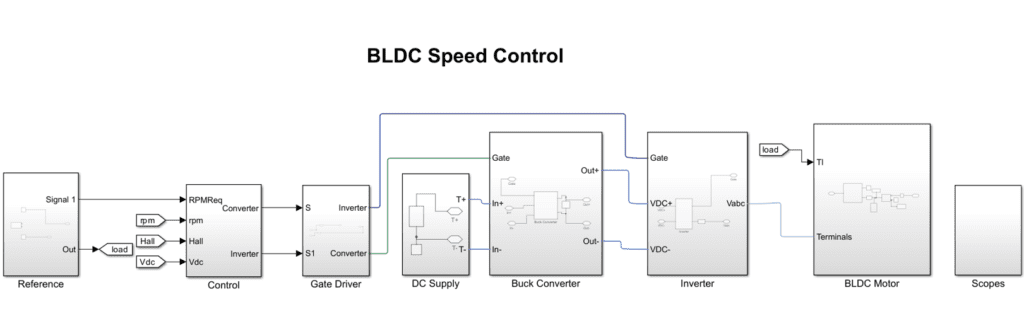
BLDC Speed Control

Systemübersicht

Was ist BLDC-Motorsteuerung und -antrieb?

Ein BLDC-Antriebssystem besteht aus einem power converter (inverter), motor controller, and feedback sensors to achieve smooth commutation and precise speed control. The motor operates using electronically controlled commutation instead of mechanical brushes, making it more efficient and durable.

Zweck der Simulation

Die Simulation hat folgende Ziele:

  • Analyze motor performance under various speed and load conditions.
  • Optimize torque control through intelligent modulation techniques.
  • Evaluate inverter switching and commutation strategies.

Hauptmerkmale

Precise Speed and Torque Control

Advanced speed control techniques ensure stable motor operation across different load conditions. ➡️ HIL/PHIL-Vorteil: Enables real-time validation of speed control strategies in a hardware-in-the-loop setup.

Sensor-Based and Sensor less Commutation

Supports both Hall-effect sensor-based commutation und sensorless control using back-EMF detection. ➡️ HIL/PHIL-Vorteil: Provides a testing environment for different commutation techniques before deployment.

Efficient Inverter Switching Control

Uses PWM techniques such as sinusoidal PWM (SPWM) and Space Vector PWM (SVPWM) for smooth switching. ➡️ HIL/PHIL-Vorteil: Allows optimization of inverter control strategies in real-time scenarios.

Performance Optimization

Simulations help optimize motor performance, control algorithms, and system integration, ensuring efficient and reliable operation.

Kosteneinsparungen

Durch frühzeitige Fehlererkennung reduzieren Simulationen Entwicklungs- und Testkosten.

Schnellere Markteinführung

Simulations accelerate the development process, enabling faster product launches.

Simulationsziele

Diese Simulation hilft bei der Bewertung von:

  • Efficiency of speed and torque control methods.
  • Impact of inverter switching on motor performance.
  • Response of the motor under transient and steady-state conditions. ➡️ HIL/PHIL-Vorteil: Ermöglicht präzise Tests unter realitätsnahen Bedingungen vor der Implementierung der Hardware.

Technische Beschreibung

Systemkonfiguration

  • Eingang: DC power supply with regulated DC-link voltage.
  • Ausgang: Three-phase BLDC motor drive.
  • Leistungsstufe: MOSFET/IGBT-based inverter with microcontroller-based control.

Regelungsmethodik

  • Modulation Techniques: Trapezoidal PWM, Sinusoidal PWM (SPWM), and Space Vector PWM (SVPWM).
  • Control Algorithms: PID, Field-Oriented Control (FOC), and Direct Torque Control (DTC).
  • Kommutierungsstrategien: Sensor-based (Hall-effect sensors) and Sensorless (Back-EMF detection). ➡️ HIL/PHIL-Vorteil: Ermöglicht die Echtzeitbewertung verschiedener Regelungsstrategien.

Advantages of BLDC Motor Control

  • Higher Efficiency: Reduced losses compared to brushed motors.
  • Longer Lifespan: No brushes lead to lower wear and maintenance.
  • Smooth Commutation: Advanced control techniques reduce torque ripple. ➡️ HIL/PHIL-Vorteil: Provides an environment for fine-tuning motor control algorithms before hardware deployment.

Anwendungen

Automobilindustrie

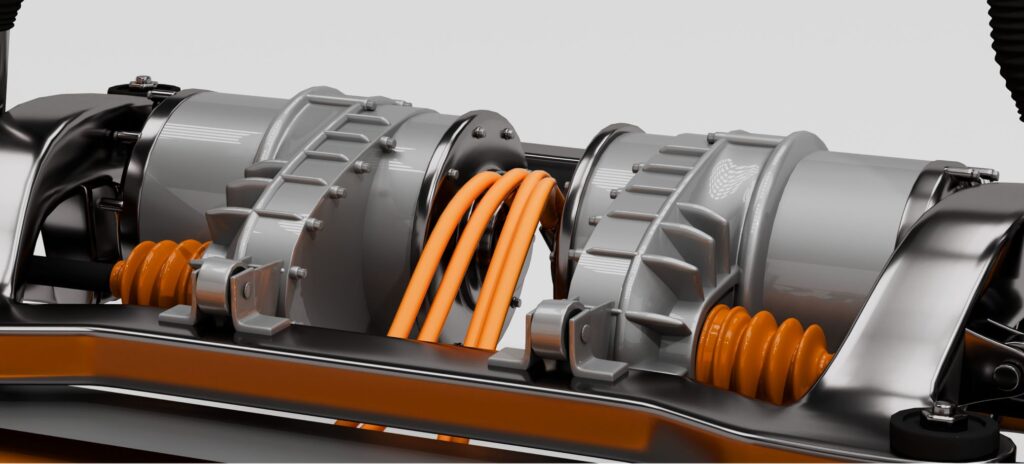
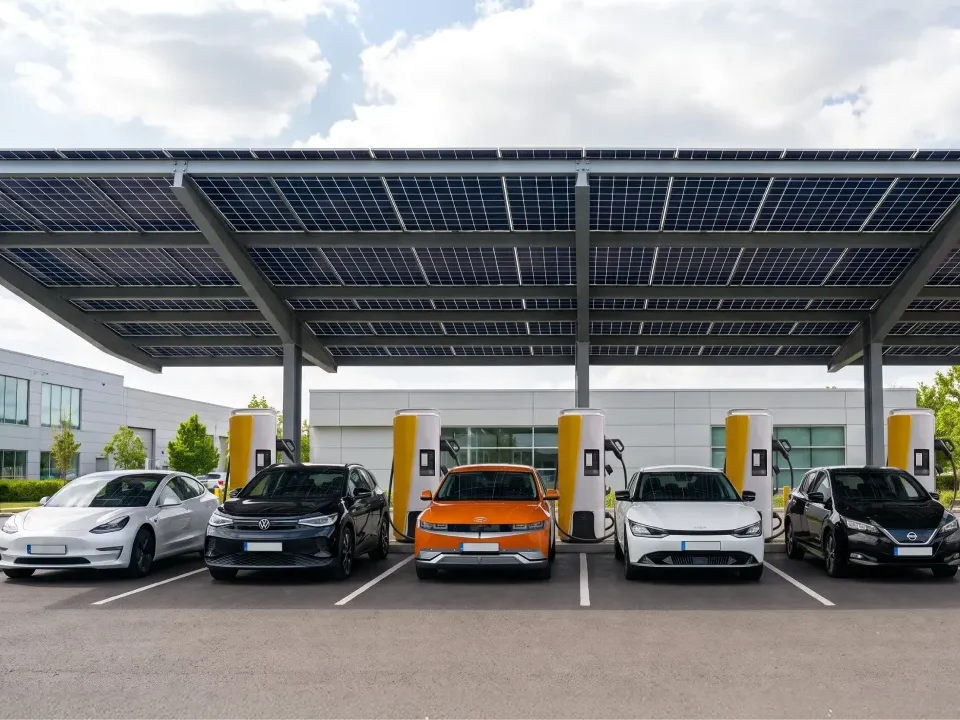
Electric Vehicles (EVs): PWM control is used to regulate the speed and torque of BLDC motors in EVs, ensuring efficient and smooth operation.

Electric Power Steering (EPS): BLDC motors with PWM control provide precise and responsive steering assistance, improving vehicle handling and safety.

HVAC Systems: PWM-controlled BLDC motors are used in automotive heating, ventilation, and air conditioning systems for efficient airflow control.

Industrielle Automatisierung

Robotics: PWM control enables precise motion control in robotic arms, conveyors, and automated guided vehicles (AGVs), enhancing productivity and accuracy.

CNC Machines: BLDC motors with PWM control are used in computer numerical control (CNC) machines for precise speed and position control in machining operations.

Pumps and Compressors: PWM-controlled BLDC motors improve energy efficiency and performance in industrial pumps and compressors.

Luft- und Raumfahrt sowie Verteidigung

Aircraft Actuators: PWM control is used in BLDC motors for flight control surfaces, landing gear, and other actuators, ensuring reliable and precise operation.

Drones and UAVs: BLDC motors with PWM control provide efficient and stable propulsion for drones and unmanned aerial vehicles (UAVs).

Military Vehicles: PWM-controlled BLDC motors are used in electric and hybrid military vehicles for propulsion and auxiliary systems.

Unterhaltungselektronik

Haushaltsgeräte:PWM-Regelung wird in BLDC-Motoren von Waschmaschinen, Kühlschränken und Staubsaugern eingesetzt, um Energieeffizienz und Leistung zu verbessern.

Kühlventilatoren:BLDC-Motoren mit PWM-Regelung werden in Computerlüftern, Luftreinigern und HVAC-Systemen für einen leisen und effizienten Betrieb verwendet.

Medizintechnik

Chirurgische Instrumente:: PWM-controlled BLDC motors provide precise and reliable operation in surgical drills, pumps, and other medical devices.

Bildgebungssysteme:: BLDC motors are used in medical imaging systems like MRI and CT scanners for accurate and smooth motion control.

Systeme für erneuerbare Energien

Wind Turbines: PWM control is used in BLDC motors for pitch control and yaw systems in wind turbines, optimizing energy capture and efficiency.

Solar Tracking Systems: BLDC motors with PWM control enable precise positioning of solar panels, maximizing energy generation.

Vorteile der Simulation

Mit dieser Simulation können Anwender:

  • Analyze motor dynamics and performance.
  • Optimize control strategies for improved efficiency.

Evaluate inverter switching and commutation techniques. ➡️ HIL/PHIL-Vorteil: Gewährleistet einen nahtlosen Übergang von der Simulation zu Hardwaretests.

Zusammenfassung

Die BLDC-Motorsteuerung und Antriebssimulation bietet einen detaillierten Rahmen zur Untersuchung von motor control techniques, inverter switching, and torque optimization. Die HIL- und PHIL-Lösungen von Impedyme verbessern den Entwicklungsprozess:

EntwicklungsphaseBeitrag von Impedyme
RegelungsdesignRCP mit HIL für schnelle Algorithmusvalidierung
Test der SteuerhardwareCIL mit Echtzeit-BLDC-Motormodellen
Verifizierung der LeistungsstufePHIL mit realer Spannungs- und Leistungsinteraktion
EndvalidierungVollsystem-PHIL unter realistischen Lastbedingungen

Zukünftige Erweiterungen

  • Integration of AI-based adaptive motor control.
  • Optimization of sensorless techniques for high-speed applications.
  • Erweiterte Fehlererkennungs- und Selbstkorrekturmechanismen.


Die BLDC-Motorsteuerung und Antriebssimulation ist ein wichtiges Werkzeug für die Entwicklung von Windenergiesystemen der next-generation motor control systemsMit den HIL/PHIL-Lösungen von Impedyme, engineers can optimize motor efficiency, enhance performance, and validate advanced control strategies before real-world deployment.