

September 10, 2026


AnwendungswissenNetzMotorProduktwissenWebinare
-
 Solid …
-
DC Mot…
-
Einweg…
-
Vollb…
-
SFP-Modul
-
Aufzugsmotorantrieb
-
Test von Reinsinus-Wechselrichtern
-
Solar-Wechselrichter-Test
-
Wechselrichter-Test
-
Traktionswechselrichter-Test
-
Controller-HIL-Test von Leistungsfaktorkorrektur-Wandlern
-
HIL-Test für die Elektromotorsteuerung
-
HIL-Test für elektrische Luftfahrzeuge
-
HIL-Test für die Elektromotorsteuerung
-
Hardware-in-the-Loop-Test für EV-Antriebsstränge
-
Hardware-in-the-Loop-Test für EV-Antriebsstränge
-
Batteriemodultest: Sicherstellung von Leistung, Sicherheit und Zuverlässigkeit
-
Batteriemodultest: Sicherstellung von Leistung, Sicherheit und Zuverlässigkeit
-
HGÜ-Stromnetz: Wie Hochspannungs-Gleichstrom-T…
-
DC-DC-Wandler-Test: Effizienz und Zuverlässigkeit sicherstellen
-
Batteriemodultest: Sicherstellung von Leistung, Sicherheit und Zuverlässigkeit
-
Stromstabilität in KI-Rechenzentren: Power-Capacitor-Shelves, PCS-Moduldesign
-
DC-Schnellladegerät für EV-Batterien
-
Powershelf-Test für Rechenzentren mit Netzemulator und DC-Last
-
Risikominimierung bei Hyperscale-Rechenzentrums-Verbindungen durch simulationsbasierte Netzstabilitätsplanung
-
Netzbildung im Megawatt-Maßstab testen mit PHIL: Fortschrittliche Power-Hardware-in-the-Loop-Validierung
-
Stabilisierung erneuerbarer Stromsysteme und Verbesserung der Netzstabilität mit netzbildenden Wechselrichtern
-
Webinare
-
BLDC-Motoremulator zum Testen von MCUs und Motorantrieben
-
Motoremulation für Motorantriebs-Tests humanoider Roboter
-
Lösungen für EMV-Konformitätstests
-
Impedyme-Motoremulator und Netzemulator für die Prüfung von Frequenzumrichtern
-
Ihre Lösung für Oberschwingungsprüfung und Netzqualität
-
Echtzeit-Netzimpedanzmodellierung mit FPGA-Integration
-
HGÜ-Test für KI-Server
-
Asynchronmotor
-
Simulation des elektrischen Bordnetzes im Automobil
-
Bidirektionaler DC/DC-Wandler
-
PWM-Steuerung für bürstenlose Gleichstrommotoren
-
BLDC-Motoremulator zum Testen von MCUs und Motorantrieben
-
HIL-Test für elektrische Luftfahrzeuge
-
Simulation einer DFIG-Windturbine
-
Dual-Active-Bridge-Regelung
-
Simulation einer EV-Dynamometer-Testumgebung
-
HIL-Test für elektrische Luftfahrzeuge
-
Simulation eines dreiphasigen Matrixumrichters
-
Simulation eines dreiphasigen Matrixumrichters
-
Netzgekoppelter Gleichrichter
-
Netzgekoppeltes Wechselrichtersystem
-
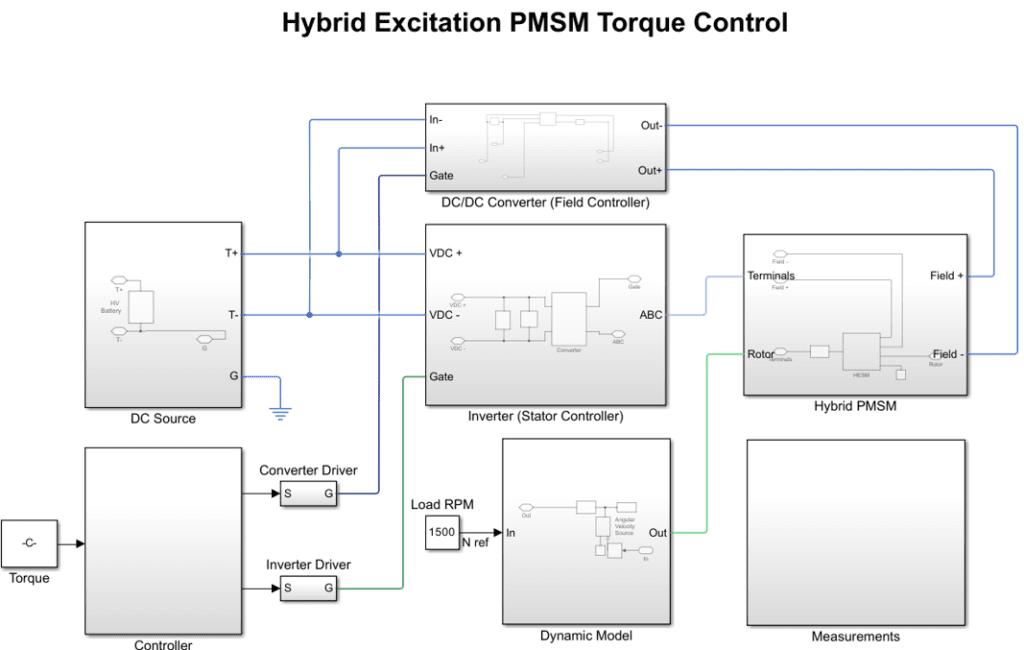
Drehmomentregelung einer hybrid erregten Synchronmaschine
-
Stern-Dreieck-Anlaufschaltung
-
IPMSM-basierter Achsantrieb
-
Vereinfachtes paralleles Hybrid-Elektrofahrzeug
-
Vereinfachtes paralleles Hybrid-Elektrofahrzeug
-
Seriell-paralleles Hybrid-Elektrofahrzeug
-
Simulation eines dreiphasigen Matrixumrichters
-
Venturini-Modulation für dreiphasigen Matrixumrichter
-
Microgrid-Frequenzregelung mittels Vehicle-to-Grid
-
Simulation eines dreiphasigen Matrixumrichters
-
Feldorientierte Regelung
-
Synchrongenerator mit vergrabenen Permanentmagneten
-
Permanentmagnet-Synchronmaschine
-
PMSM-Rotorwinkelgeschwindigkeit
-
PMSM-basierter elektrischer Traktionsantrieb
-
Maximum-Power-Point-Nachführung
-
Sechsphasige Permanentmagnet-Synchronmaschine
-
Synchronmaschinenbasierte elektrische Antriebssimulation
-
Einstufiger Solar-Wechselrichter
-
Simulation eines dreiphasigen Matrixumrichters
-
Totem-Pole-PFC-Simulation
-
Zwölfpuls-Thyristor-Gleichrichter
-
Onboard-Ladegerät für Zweiräder
-
Vienna-Gleichrichter-Simulation
-
Hochspannungs-Gleichstrom
-
Kabellose Energieübertragung
-
Solid …
-
Test von Reinsinus-Wechselrichtern
-
Solar-Wechselrichter-Test
-
Wechselrichter-Test
-
Hardware-in-the-Loop-Test für EV-Antriebsstränge
-
HGÜ-Stromnetz: Wie Hochspannungs-Gleichstrom-T…
-
Powershelf-Test für Rechenzentren mit Netzemulator und DC-Last
-
Risikominimierung bei Hyperscale-Rechenzentrums-Verbindungen durch simulationsbasierte Netzstabilitätsplanung
-
Netzbildung im Megawatt-Maßstab testen mit PHIL: Fortschrittliche Power-Hardware-in-the-Loop-Validierung
-
Lösungen für EMV-Konformitätstests
-
Impedyme-Motoremulator und Netzemulator für die Prüfung von Frequenzumrichtern
-
Ihre Lösung für Oberschwingungsprüfung und Netzqualität
-
Echtzeit-Netzimpedanzmodellierung mit FPGA-Integration
-
HGÜ-Test für KI-Server
-
Simulation eines dreiphasigen Matrixumrichters
-
Simulation eines dreiphasigen Matrixumrichters
-
Netzgekoppelter Gleichrichter
-
Netzgekoppeltes Wechselrichtersystem
-
Microgrid-Frequenzregelung mittels Vehicle-to-Grid
-
Maximum-Power-Point-Nachführung
-
Einstufiger Solar-Wechselrichter
-
DC Mot…
-
SFP-Modul
-
Aufzugsmotorantrieb
-
Wechselrichter-Test
-
Traktionswechselrichter-Test
-
Hardware-in-the-Loop-Test für EV-Antriebsstränge
-
DC-DC-Wandler-Test: Effizienz und Zuverlässigkeit sicherstellen
-
DC-Schnellladegerät für EV-Batterien
-
BLDC-Motoremulator zum Testen von MCUs und Motorantrieben
-
Motoremulation für Motorantriebs-Tests humanoider Roboter
-
Impedyme-Motoremulator und Netzemulator für die Prüfung von Frequenzumrichtern
-
Asynchronmotor
-
PWM-Steuerung für bürstenlose Gleichstrommotoren
-
BLDC-Motoremulator zum Testen von MCUs und Motorantrieben
-
Simulation einer EV-Dynamometer-Testumgebung
-
Drehmomentregelung einer hybrid erregten Synchronmaschine
-
IPMSM-basierter Achsantrieb
-
Feldorientierte Regelung
-
Synchrongenerator mit vergrabenen Permanentmagneten
-
Permanentmagnet-Synchronmaschine
-
PMSM-Rotorwinkelgeschwindigkeit
-
PMSM-basierter elektrischer Traktionsantrieb
-
Sechsphasige Permanentmagnet-Synchronmaschine
-
Synchronmaschinenbasierte elektrische Antriebssimulation