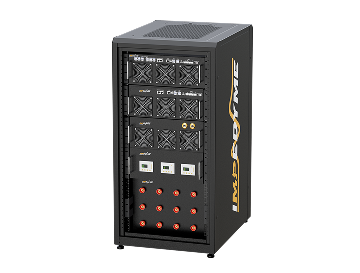

Impedyme Grid Emulator (CHP Series)
The Impedyme Grid Emulator, part of the CHP Series platform, is a next-generation regenerative grid simulation and emulation system designed for advanced Hardware-in-the-Loop (HIL) and Power Hardware-in-the-Loop (PHIL) testing. This state-of-the-art solution is ideal for validating renewable energy systems, microgrid controllers, inverter performance, and other grid-interactive devices under realistic conditions.

- IEC 61000-3
- IEC 61000-4
Users can emulate utility grids from various regions to validate conformance under diverse conditions, making it an essential tool for realistic grid emulation in lab and field settings.
- Advanced Power Disturbance Simulation
With three high-performance DSPs, the CHP Series grid emulator enables precise grid simulation of real-world conditions, including harmonics, voltage sags/swells, flicker, and other power quality events — without external equipment. This makes it a powerful grid simulator for research and compliance testing.
- Optimized for PHIL
Its low-latency PHIL interface ensures stable, high-fidelity grid simulation, allowing direct connection of inverters, relays, and protection devices for realistic closed-loop testing.
- Flexible Configuration
Supporting single, split, and three-phase configurations with both AC and DC testing, the CHP Series grid emulator provides a versatile grid simulator platform for validating grid-tied devices and smart grid technologies.

Impedyme GridSim Studio App
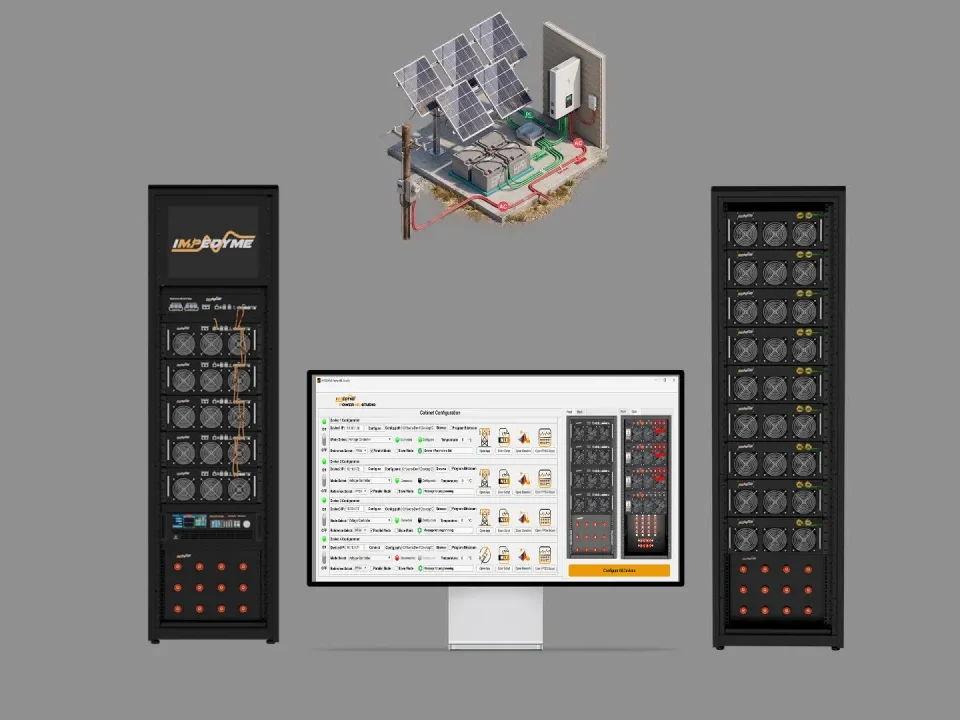
Impedyme GridSim Studio is a powerful and intuitive graphical user interface designed to configure, operate, and visualize real-time grid emulation scenarios. It is a core component of Impedyme’s CHP (Combined HIL and Power HIL) platform, enabling seamless control of advanced grid-tied power electronics testing environments.
It provides advanced features for both research applications and compliance testing, including support for standards such as IEEE 1547, UL 1741, and IEC 61000.

• Mode Selector: Choose control modes like Voltage Controller.
• Slave Mode: Sync as a secondary device in multi-node setups.
• Reference Source: Select internal or external references.
• Parallel Mode: Supports multi-cabinet high-power systems.
• AC, DC, or combined operation
• Independent phase voltage and frequency control
• Adjustable voltage bias, phase shift, and frame type
• Phase sequence and amplitude/angle control
• Harmonic injection with customizable orders and levels


IEEE 1547 Voltage Ride-Through and Trip Testing
The GridSim Studio now includes a dedicated module for IEEE 1547 testing, enabling automated and manual evaluation of inverter and converter responses to voltage and frequency disturbances.
1. Features Shown in the Ride-Through Test Module:
2. Purpose and Benefits for IEEE 1547 Compliance
IEEE 1547 requires Distributed Energy Resource (DER) inverters and power converters to remain connected during specified voltage and frequency deviations. The GridSim Studio platform, working in tandem with the Impedyme grid emulator and grid simulator, enables:
- Automated ride-through testing without external scripting
- Stress testing at boundary points of permissible limits
- Failure detection based on trip zones
- Repeatable and programmable test scenarios, ensuring consistent grid simulation and validation for certification purposes
- By combining these features with the Grid Impedance Model (R, L, C), users can also simulate realistic grid emulation conditions such as low-impedance faults, resonances, and voltage sags/swells.
Example Use Case:
“A solar inverter manufacturer uses GridSim Studio to run a compliance test. By programming a sequence with a 0.5 pu voltage drop lasting 0.16 seconds, the engineer can verify that the inverter does not trip, meeting the mandatory ride-through window of IEEE 1547. Similarly, frequency drops to 55 Hz for 1.2 seconds are tested to ensure continued operation within permissible operating zones.”

IEEE 1547 Voltage Ride-Through and Trip Compatibility test for converter testing allows defining operating points inside and outside of allowed ride-through area and see if the converter shows desired characteristics
Key Benefits
| Feature | Benefit |
|---|---|
| Real-Time Grid Simulation | Validate control under realistic and dynamic grid conditions |
| IEEE 1547 Test Automation | Simplifies grid code compliance workflows |
| Harmonic Injection | Evaluate EMI and filter design robustness |
| Grid Impedance Modeling | Emulate weak grid or faulted line behavior |
| Live Data Monitoring | Reduce testing uncertainty and improve development iteration cycle |
| Scalable Power Platform | Compatible with CHP systems up to 1.3 MW and beyond |
GridSim App Highlights:
The GridSim Studio app enhances the CHP Series grid emulator with a range of powerful tools for streamlined grid simulation and compliance testing:
- Drag-and-Drop Grid Profile Creation Easily build and modify grid scenarios using a graphical interface. Simulate custom voltage/frequency profiles, fault conditions, and disturbance waveforms without scripting or programming.
- Real-Time Grid Impedance Simulation with high-speed FPGA integration The App enables dynamic modeling of grid impedance under various operating conditions, such as weak grid, fault ride-through, or islanded modes. This is crucial for testing the stability and behavior of power electronics under realistic operating scenarios.
- Scenario Library and Automation Choose from a library of predefined regulatory test templates or create your own automated test sequences to accelerate development and compliance validation.
- Seamless Integration with Simulink and FPGA-based HIL For users working in model-based design environments, the GridSim App can be integrated with MATLAB/Simulink and Impedyme's FPGA-based HIL controllers, enabling end-to-end digital-to-physical validation loops.
- Grid impedance emulation for realistic fault and compliance testing
- Customizable harmonic profile for EMC and standards compliance
- Built-in safety mechanisms including relay protection and soft start
- Scalable and ready for PHIL applications up to 1.3 MW

Grid Emulator Configuration for Different DUTs
Applications
The Impedyme Grid Emulator is ideal for:
- Grid-tied inverter testing
- Renewable energy integration (solar, wind)
- Smart grid and microgrid development
- DER certification and compliance
- Power system protection studies
- Educational and laboratory research

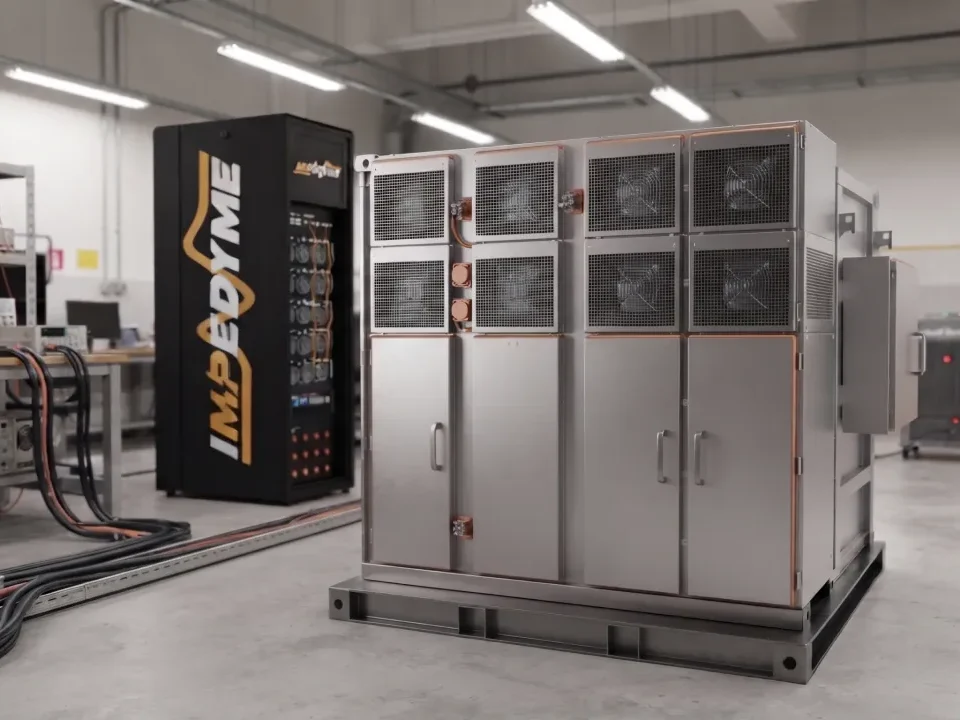 September 10, 2026
Solid State Transformer
What a DC motor controller is, how the circuit works, controller types and ICs, how to choose one, and how to validate it before it drives a real motor.
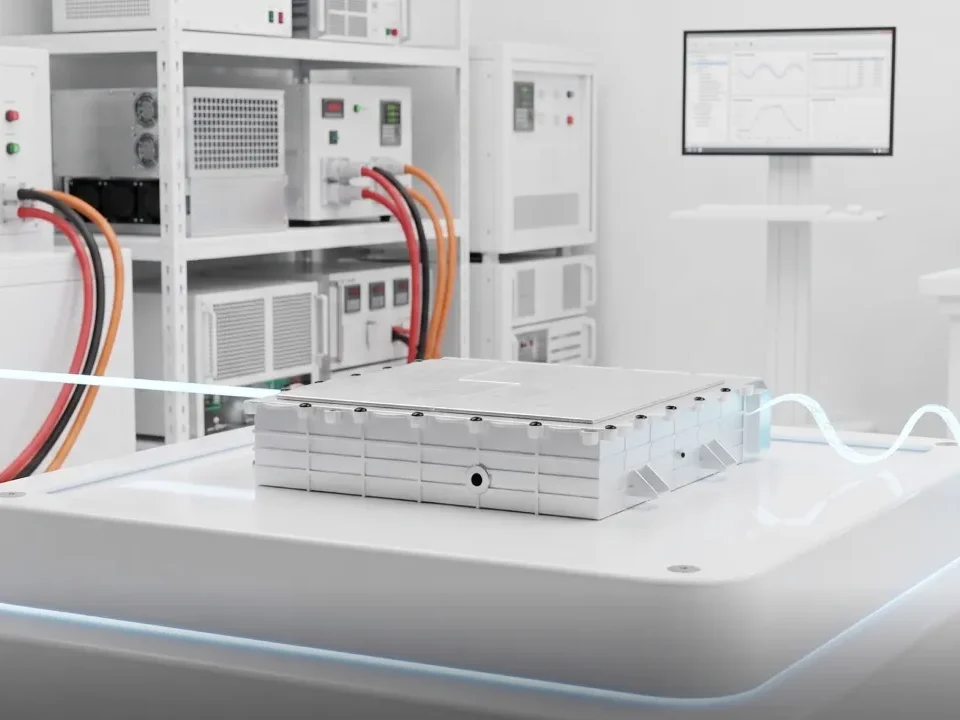 August 4, 2026
Pure Sine Wave Inverter Test
A complete pure sine wave inverter test procedure — waveform, THD, non-linear load and transient testing, with pass/fail criteria and HIL validation.
 August 2, 2026
Solar Inverter Test
Discover how solar inverter testing verifies MPPT, efficiency, safety, and grid compliance with complete guidance on PV inverter testing, HIL, and PHIL.
 August 1, 2026
Inverter Test
How to test an inverter — from bench setup and step-by-step procedure to standards and HIL/PHIL emulation for EV, solar, and industrial inverters.
 July 10, 2026
Hardware in the Loop Testing for Microgrids and Renewable Energy Systems
Learn how hardware in the loop testing validates microgrid controllers, solar inverters, and protection relays with FPGA-based real-time simulation.
 June 17, 2026
HVDC Power Grid: How High-Voltage Direct Current Transmission
How an HVDC power grid works—from LCC and VSC converters, DC protection, and SiC devices to validating converters with FPGA-based PHIL testing.
 April 16, 2026
Data Center Powershelf Testing with Grid Emulator and DC Load
Learn how to perform accurate data center PSU and powershelf testing using grid emulator, real-time AC/DC loads, and PHIL for high-fidelity power validation.
 February 5, 2026
De-Risking Hyperscale Data Center Interconnections Through Simulation-First Grid Stability Planning
Learn how Impedyme de-risks hyperscale data center interconnections using grid stability simulation, digital twins, and Hardware-in-the-Loop testing.
 November 5, 2025
Megawatt-Scale Testing Grid Forming with PHIL: Advanced Power Hardware-in-the-Loop Validation
Impedyme’s megawatt-scale PHIL enables precise testing grid forming with PHIL for reliable, high-fidelity renewable power validation.
 August 27, 2025
EMC Compliance Test Solutions
Discover advanced EMC compliance test solutions with regenerative grid emulators, automated software, and IEC 61000 support from Impedyme.
 August 21, 2025
Impedyme Motor Emulator and Grid Emulator for Variable Frequency Drive Testing
Impedyme delivers advanced variable frequency drive testing with motor and grid emulators. Safe and energy-efficient PHIL validation for HVAC.
 August 16, 2025
Your Harmonic Test and Power Quality Solution
Discover Impedyme’s cutting-edge solutions for harmonic test, compliance, and grid simulation—ensuring accuracy, efficiency, and IEEE 519 compliance.
 August 6, 2025
Real Time Grid Impedance Modeling with FPGA Integration
Impedyme’s GridSim Studio delivers real-time grid impedance modeling with FPGA precision—ideal for PHIL testing and accurate power system simulation.
 August 2, 2025
HVDC Testing for AI Server
Impedyme delivers Power HIL solutions for safe, real-time high voltage direct current (HVDC) testing in AI server infrastructure, from 25kW to 1MW+.
 March 31, 2025
Three-Phase Grid-Connected Inverter Using Direct-Quadrature
Experience real-time simulation of grid-tied three-phase inverters using DQ control and SPWM for precise power regulation, grid synchronization, and enhanced stability.
Ready to Replace Your NHR Grid Simulator?
Already running an NH Research grid simulator? See how the Impedyme CHP Series grid emulator compares as a replacement, model for model, then partner with Impedyme to specify the voltage range, fault emulation, and grid code profiles your inverter, microgrid, and grid simulation testing requires.