
impedyme power grid stability

Application knowledgeGridMotorProduct knowledgeWebinars

impedyme power grid stability

Stabilizing Renewable Power Systems and Enhancing Power Grid Stability with Grid Forming Inverters

As the global energy landscape transitions toward renewable generation, the power grid stability of modern systems is increasingly challenged by the declining presence of traditional synchronous generators. To address this challenge, Grid Forming (GFM) inverters, supported by advanced grid emulation and simulation platforms, are redefining how renewable-based systems achieve stability, reliability, and resilience in the modern power grid.

The Role of Grid Forming Inverters in Renewable Integration

Grid forming inverters are a new class of power converters that actively establish and regulate voltage and frequency, mimicking the natural behavior of synchronous machines. By supporting power grid stability, these inverters play a crucial role in maintaining reliable operation under varying grid conditions. Unlike grid-following (GFL) inverters that depend on an existing voltage reference, GFMs act as voltage sources, enabling independent operation under both grid-connected and islanded conditions.

These inverters are crucial for stabilizing low-inertia power systems dominated by solar, wind, and battery energy storage systems (BESS). By providing synthetic inertia, black-start capability, and fault current support, they ensure that renewable plants can sustain grid operation even under fault or disconnection scenarios.

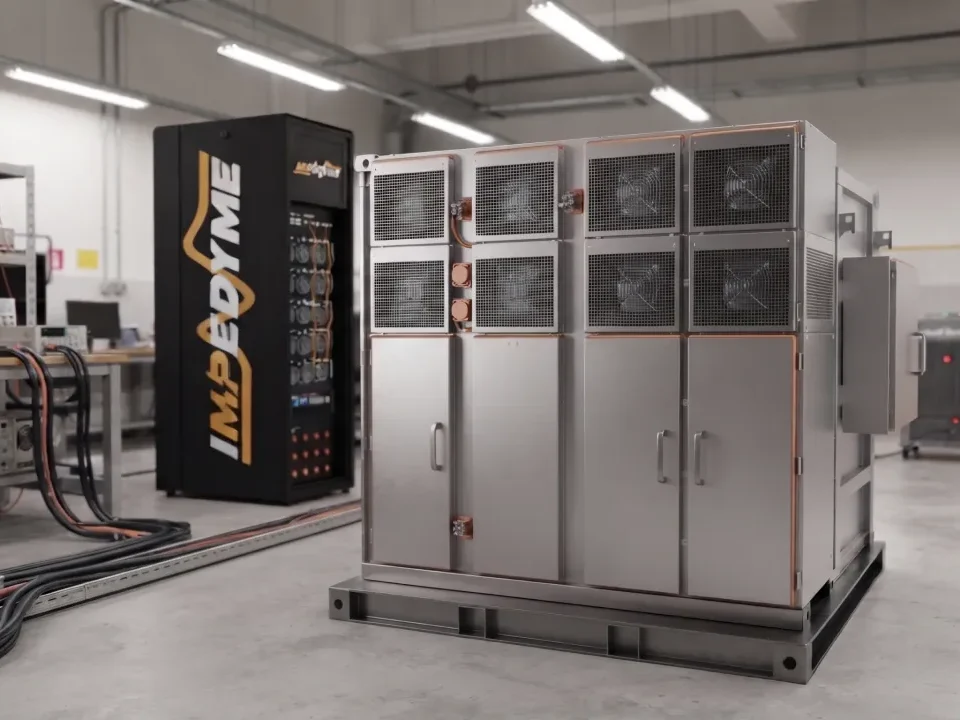
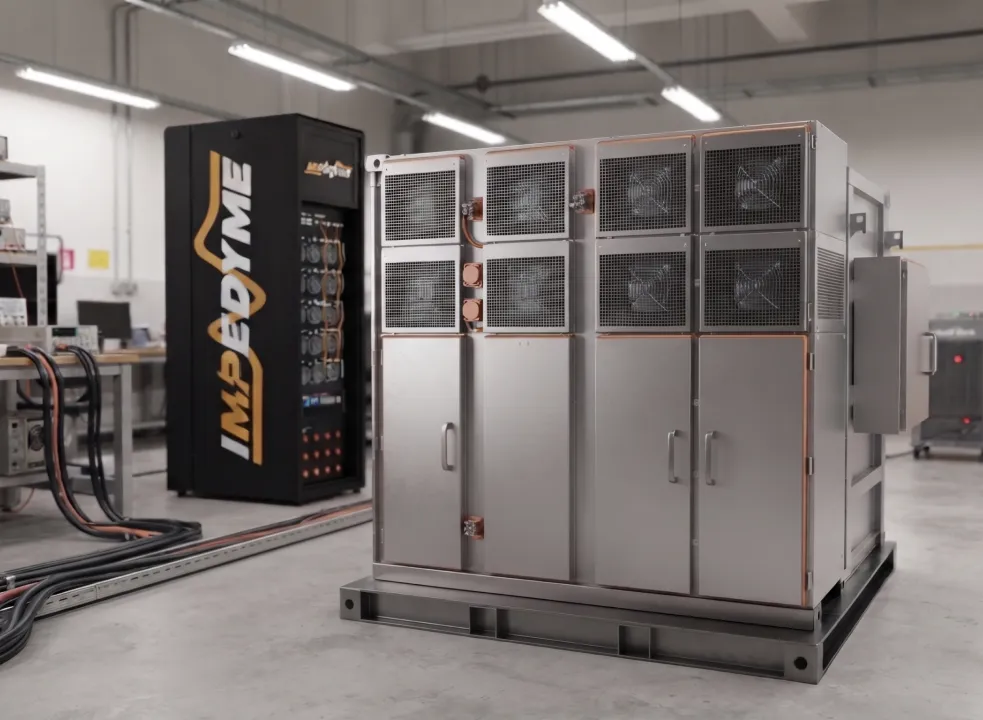
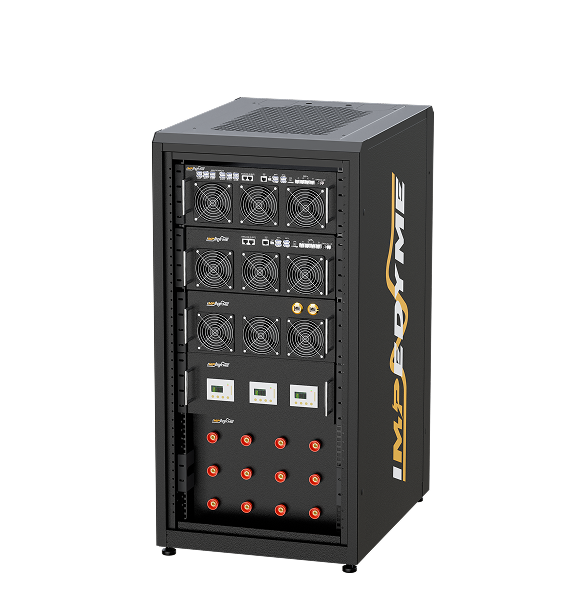
The Controllable Grid Interface (CGI)

At Impedyme, the Controllable Grid Interface (CGI) serves as a state-of-the-art grid emulator, allowing researchers to:

  • Recreate weak, strong, and unbalanced grids for real-time inverter testing.
  • Simulate grid faults, phase jumps, and transients.
  • Evaluate ride-through capabilities and control resilience.
  • Conduct hardware-in-the-loop experiments safely at full power.

The CGI acts as a realistic, fully controllable grid substitute, ensuring that the tested hardware behaves as it would under field conditions—without risk to the actual transmission system.

Understanding the Stability Challenge

As renewable sources replace conventional synchronous generators, the grid loses its inherent inertia and damping. Stability, once maintained by the physical dynamics of rotating machines, now relies on the control behavior of grid forming inverters (GFMs). These inverters synthesize grid voltage and frequency through advanced control algorithms, but their stability depends on how effectively the control system interacts with the external network.

Key factors influencing GFM stability include:

  • Filter design (L, LC, or LCL): Determines current ripple, attenuation, and resonance characteristics that can destabilize control loops if not properly damped.
  • Grid strength: Weak grids (low SCR) increase coupling between inverter and grid dynamics, heightening the risk of oscillations.
  • Control structure: Virtual synchronous machine (VSM), droop, or virtual impedance strategies shape frequency response and transient behavior.
  • Multi-inverter interactions: Parallel GFMs can exhibit coupled oscillations or synchronization loss if parameters are mismatched.

CapabilityDescription
Inertia Emulation (RoCoF Support)GFM inverters emulate synchronous generator inertia, slowing frequency deviations and improving system stability after disturbances.
Black-Start and Islanding OperationGFMs can energize de-energized networks and maintain stable voltage and frequency without external references.
Voltage and Reactive Power ControlProvide autonomous reactive support and damping, essential for voltage stability in renewable-rich grids.
Fault Ride-Through (FRT)Maintain grid connection and inject reactive current during voltage sags or swells for compliance with modern grid codes.
InteroperabilityEnsure stable coordination among multiple GFMs and grid-following devices from various manufacturers.

Grid Following Inverters vs Grid Forming Control

Inverter-based renewable systems use two main control philosophies: grid following and grid forming. The key difference lies in how each interacts with the grid’s voltage and frequency.

  • Grid Following Inverters (GFL):
    • Depend on the grid voltage as a reference using a Phase-Locked Loop (PLL).
    • Inject power by controlling current, making them followers of the existing grid.
    • Work well in strong grids but struggle in weak or islanded conditions since they cannot set voltage or frequency, which can impact power grid stability.
  • Grid Forming Inverters (GFM):
    • Create their own voltage and frequency reference, acting as a virtual generator.
    • Can operate in weak grids or islanded systems, supporting power grid stability through virtual inertia and damping.
    • Enable renewable-dominated systems to maintain frequency and voltage without relying on synchronous machines.
Grid Following Inverters  vs Grid Forming Control

Impedyme Grid Forming (GFM) Validation Initiative

The Impedyme GFM Validation Initiative represents a major advancement in power system stability research, showcasing Impedyme’s leadership in next-generation grid control technologies. Through comprehensive modeling, simulation, and experimental testing, Impedyme is demonstrating how grid forming inverters (GFMs) can effectively assume the stabilizing roles once fulfilled by synchronous machines — enabling a more resilient, inverter-dominated power system.

1. Grid Forming PV System Validation

Leveraging Impedyme’s advanced Converter Grid Interface (CGI) platform and real-time digital simulation environment, the engineering team conducted full-scale validation of a 2 MW PV-based grid-forming inverter developed in-house.

The validation campaign evaluated system performance under multiple operational modes and disturbance conditions, including:

  • Black-start operation in an islanded network
  • Seamless synchronization with a weak or dynamically unstable grid
  • Dynamic response to sudden load and frequency perturbations
  • Power quality and stability under solar intermittency

Test results confirmed that the inverter could autonomously establish grid voltage and frequency, regulate real and reactive power flows, and sustain dynamic stability without relying on external grid references — demonstrating genuine grid-forming capability.

2. Wind Turbine Grid Forming Performance

Impedyme further extended its validation efforts to a 2.5 MW Grid-Forming Doubly-Fed Induction Generator (DFIG) test platform. Integrated with a high-fidelity Hardware-in-the-Loop (HIL) environment, the setup replicated weak-grid conditions characterized by short-circuit ratios (SCR) below 2, allowing detailed investigation of stability margins and converter-grid interactions.

The study focused on key aspects of GFM wind turbine performance, such as:

  • Synthetic inertia response during system frequency excursions
  • Dynamic voltage control under reactive power fluctuations
  • Low-voltage ride-through (LVRT) and post-fault recovery
  • Islanding detection and resynchronization after transient events

Experimental data validated that Impedyme’s GFM wind systems can actively support grid stability and resilience — even in highly converter-dominated networks with minimal physical inertia.

Power Hardware-in-the-Loop (PHIL): Bridging Simulation and Reality

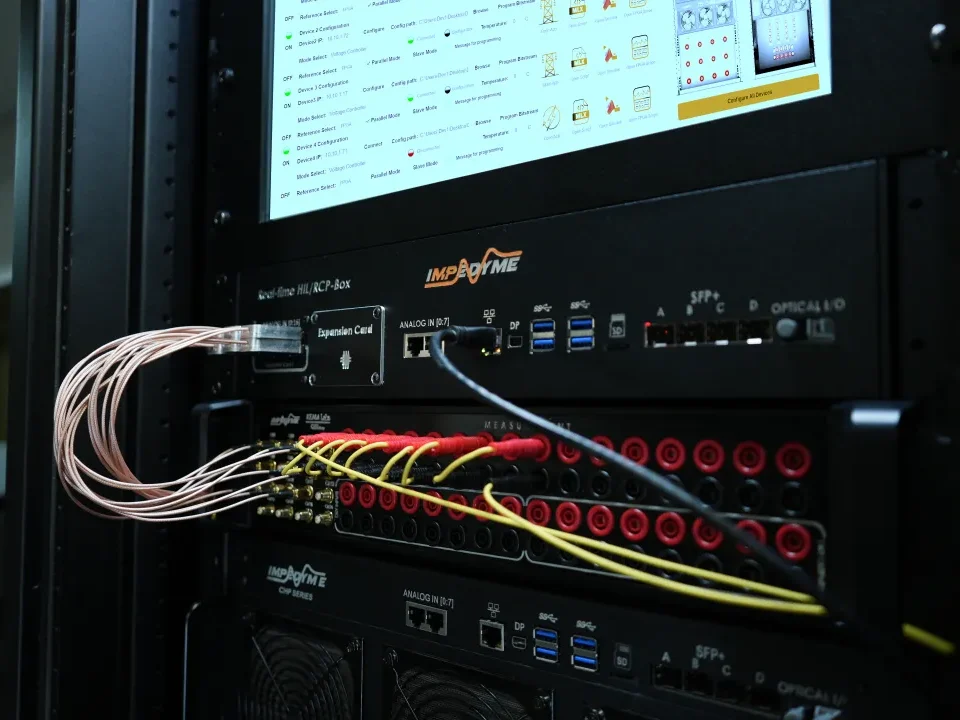
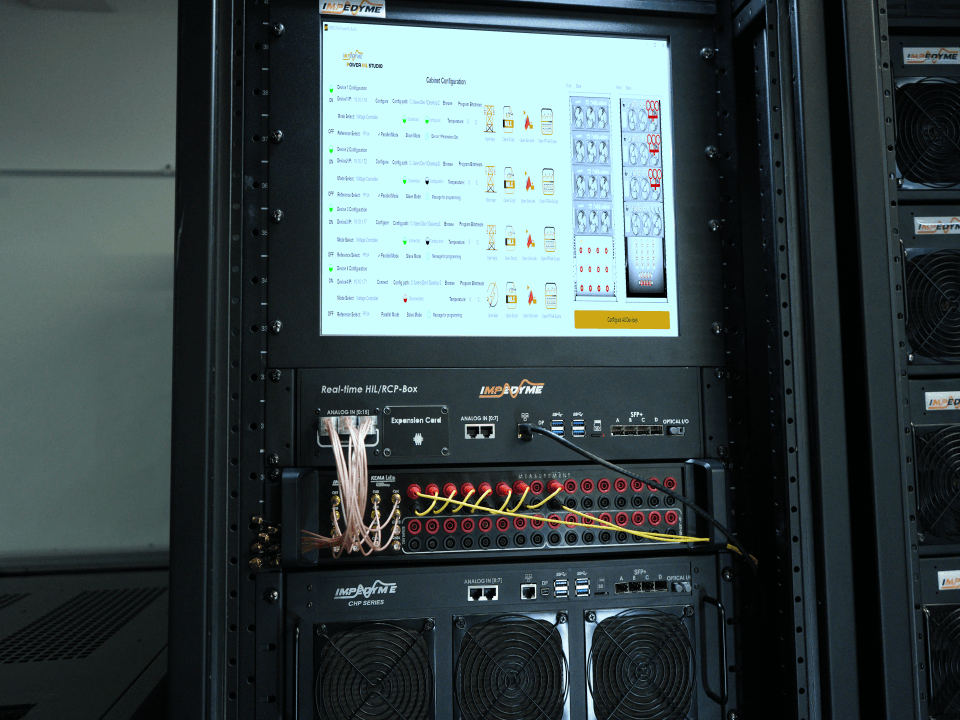
Traditional simulation alone cannot capture all the nonlinear dynamics of real hardware. That’s why Impedyme integrates Power Hardware-in-the-Loop (PHIL) systems into its test platforms, enabling high-fidelity and safe validation of hardware + software in closed-loop conditions.

How PHIL Enhances Testing:

  • A digital real-time simulator generates the virtual grid and system environment.
  • A power amplifier or grid emulator translates the simulation outputs into real voltages/current flows and drives the hardware under test.
  • The hardware device (e.g., a grid-forming inverter, converter, or turbine emulator) then responds as it would in a real network.
  • The response (voltage, current, control signals) is measured, digitised, and fed back into the simulation loop — enabling closed-loop interaction between real hardware and the simulated system.

Impedyme’s PHIL test systems span both laboratory-scale and higher-power platforms, bridging the gap between modelling and deployment, supporting validation of converters, grid emulators, inverters, microgrids, EV powertrains, and more.

Why Grid Forming Inverters Are the Future of Renewable Stability

As traditional synchronous generators phase out, the grid loses its natural inertia and voltage reference. Conventional grid-following inverters depend on the existing grid to set voltage and frequency through a phase-locked loop (PLL), which limits their performance in weak or islanded networks. Without a strong grid to follow, these inverters cannot sustain stable operation, making renewable systems vulnerable to frequency fluctuations and voltage instability.

Grid forming inverters (GFMs) overcome this limitation by actively establishing grid voltage and frequency, emulating the behavior of synchronous machines. Through advanced control algorithms, they provide virtual inertia, share load dynamically, and stabilize the system during transients. This self-sufficient operation enables black starts, supports islanded microgrids, and ensures reliability in low-inertia renewable networks. In essence, GFMs are the cornerstone of a stable, fully renewable power grid.

Real-Time Grid Simulation: Digital Twins for Renewable Stability

Complementing physical emulation, Impedyme uses real-time digital twins of entire grid networks. These models allow researchers to explore scenarios such as:

  • Large-scale renewable penetration (up to 100%)
  • Dynamic interaction between PV, wind, and storage GFMs
  • Coordinated control across hybrid power plants
  • Grid restoration strategies following blackouts

Coupled with PHIL, these digital simulations ensure that every GFM inverter or hybrid plant is validated across both hardware and software domains.

A New Era of Renewable Grid Stability

Impedyme highlights how grid-forming inverters, grid emulation, and PHIL-based validation are redefining the power grid stability paradigm in renewable power systems. With real-time testing, digital twins, and large-scale experimentation, engineers now have the tools to build fully renewable grids that can sustain themselves without legacy infrastructure.

As renewable penetration surpasses 80% in many systems worldwide, the technologies emerging from these projects will be the foundation of tomorrow’s smart, stable, and carbon-free power networks, further enhancing power grid stability.