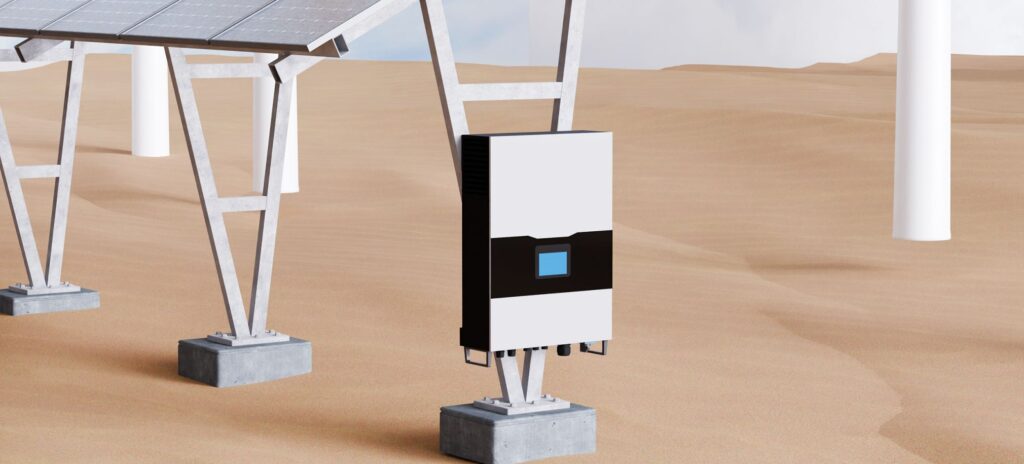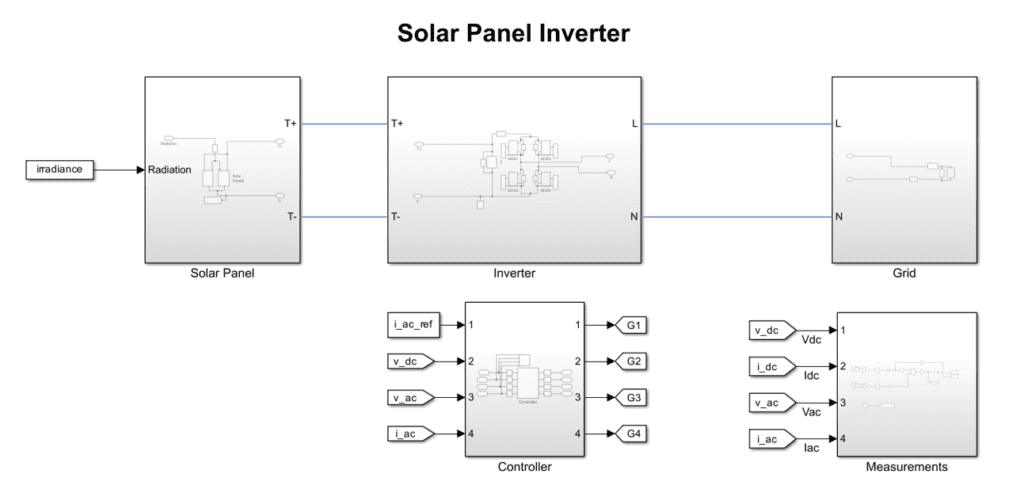

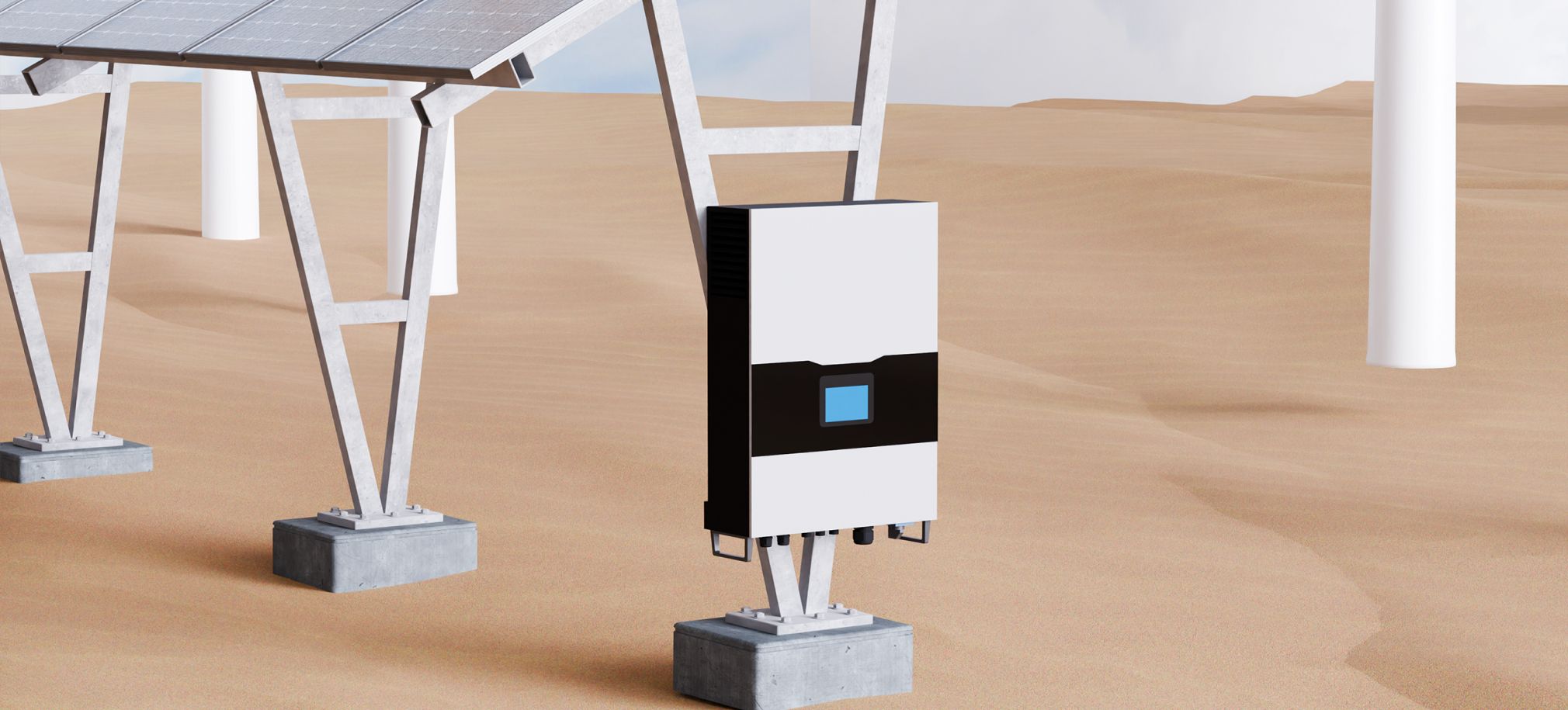
Ein Single Solar Inverter plays a vital role in converting direct current (DC) from photovoltaic (PV) panels into alternating current (AC) for grid or standalone use.
This study evaluates the efficiency of a single-stage solar inverter, focusing on power conversion losses, control strategies, and performance optimization.
A single-stage solar inverter directly converts DC from PV panels into AC without an intermediate DC-DC conversion stage. This approach offers:
The efficiency analysis aims to:
✔ Identify major sources of power losses.
✔ Assess the impact of modulation strategies.
✔ Optimize control techniques for maximum output.
✔ Compare efficiency under varied load and environmental conditions.
A single solar inverter performs direct DC-to-AC conversion, eliminating the need for a separate DC-DC stage.
Vorteil Maximizes usable energy from PV panels while improving system reliability.
Efficient operation depends on minimizing energy losses. The single solar inverter design addresses:
Vorteil Identifies and mitigates key loss areas for peak performance.
Optimized switching methods enhance both efficiency and output quality:
Vorteil Delivers clean, stable AC power with minimal harmonic distortion.
The inverter maintains efficiency across real-world operating conditions:
Vorteil Consistent output in both stable and fluctuating environments.
A single solar inverter ensures safe, regulation-compliant operation by:
Vorteil Seamless integration with utility grids and improved grid reliability.
This simulation aims to:
✔ Quantify the efficiency of a single-stage solar inverter under real-world conditions.
✔ Identify and minimize key power losses.
✔ Optimize modulation techniques for improved performance.
✔ Evaluate inverter response to dynamic load variations.
✔ Higher efficiency due to reduced conversion stages.
✔ Lower cost and complexity compared to multi-stage inverters.
✔ Faster response time for grid integration and stability.
✔ Compact and lightweight design for easy installation.
Ein Single Solar Inverter is a versatile solution for converting solar-generated DC power into grid-compatible AC power.
Its efficiency, compact design, and adaptability make it ideal for a wide range of industries and environments.
Vorteil Reduces electricity bills and provides energy independence.
Vorteil Lowers energy costs and supports corporate sustainability goals.
Vorteil Enhances grid stability and renewable energy penetration.
Vorteil Increases energy resilience and local energy autonomy.
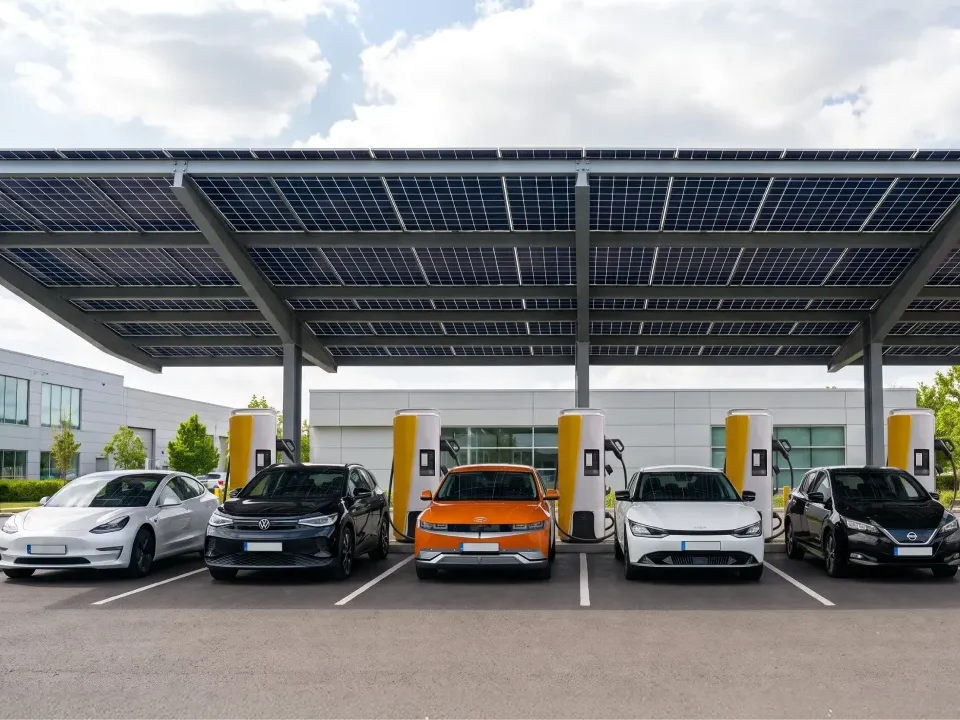
Vorteil Supports sustainable transport and grid balancing.
Vorteil Improves network reliability in urban and rural locations.
Vorteil Boosts productivity and reduces reliance on fossil fuels.
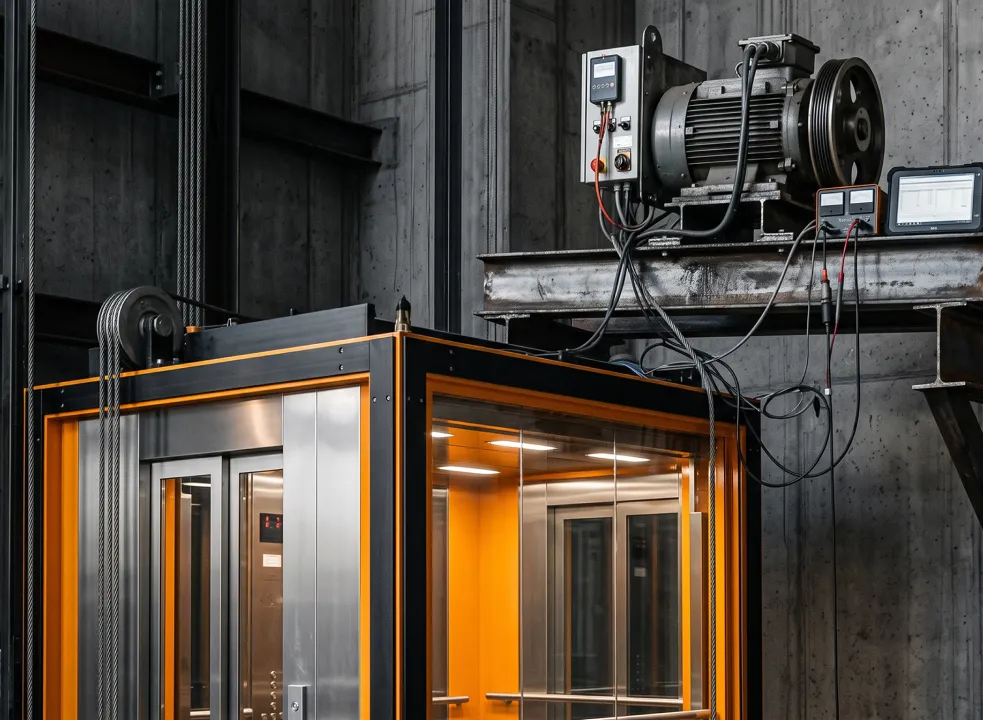
Vorteil Cuts operational costs and supports environmental goals.
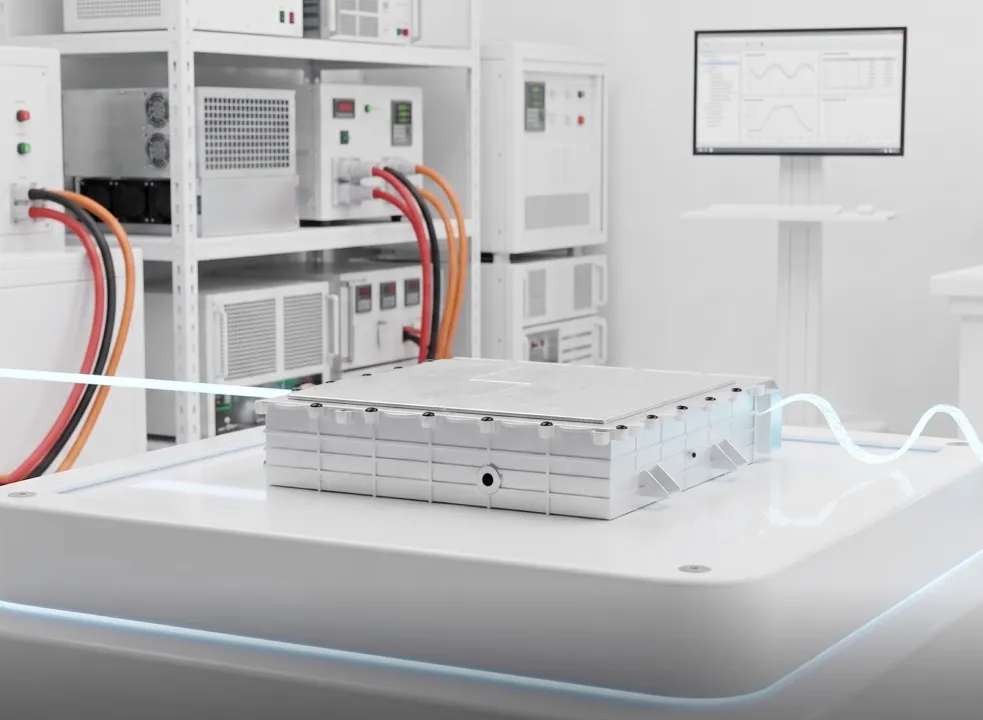
Vorteil Advances knowledge and technology adoption.
By utilizing this simulation, engineers can:
✔ Optimize single-stage inverter design for maximum efficiency.
✔ Identify power loss sources and implement corrective measures.
✔ Ensure compliance with grid standards and power quality regulations.
✔ Improve inverter durability and operational reliability.
This project provides an in-depth analysis of a single-stage solar inverter’s efficiency, focusing on power loss reduction, control optimization, and grid compliance. By integrating advanced modulation strategies and loss estimation techniques, this system enhances PV energy conversion and utilization.
| Entwicklungsphase | Beitrag von Impedyme |
|---|---|
| Regelungsdesign | RCP mit HIL für schnelle Algorithmusvalidierung |
| Test der Steuerhardware | CIL with real-time cycloconverter models |
| Verifizierung der Leistungsstufe | PHIL mit realer Spannungs- und Leistungsinteraktion |
| Endvalidierung | Full-system PHIL under realistic grid and load conditions |
✔ Implementation of AI-based MPPT for adaptive power tracking.
✔ Integration of GaN or SiC-based power switches for reduced losses.
✔ Development of hybrid inverter systems combining battery storage.
✔ Advanced fault detection and self-healing mechanisms.
The efficiency analysis of single-stage solar inverters plays a crucial role in improving solar energy utilization. By optimizing power conversion techniques and reducing losses, this project contributes to the development of more reliable and high-performance solar inverter systems.