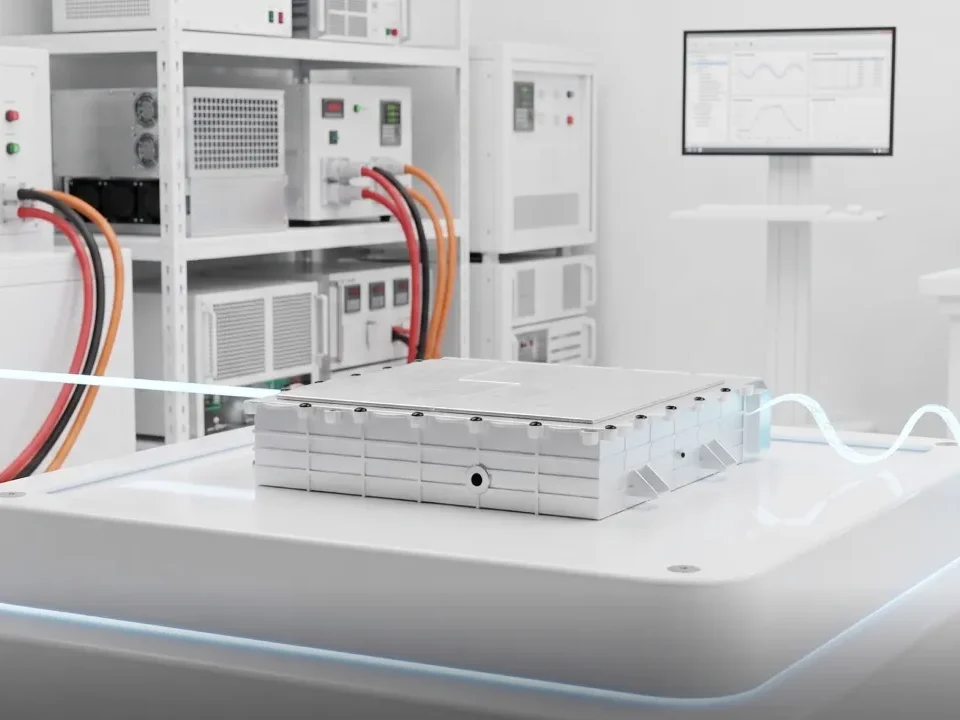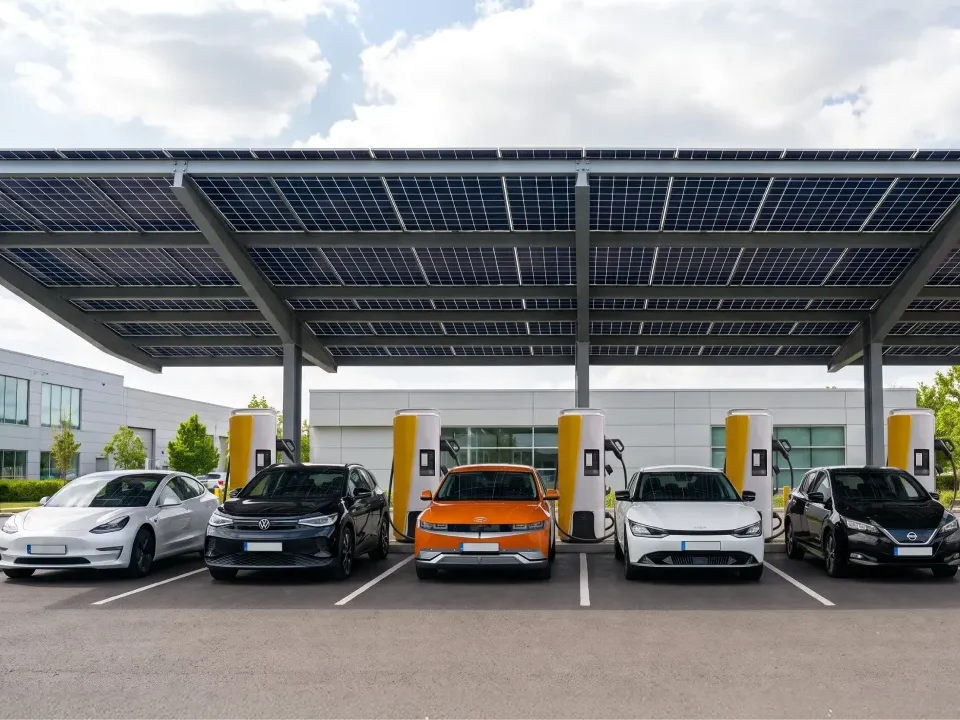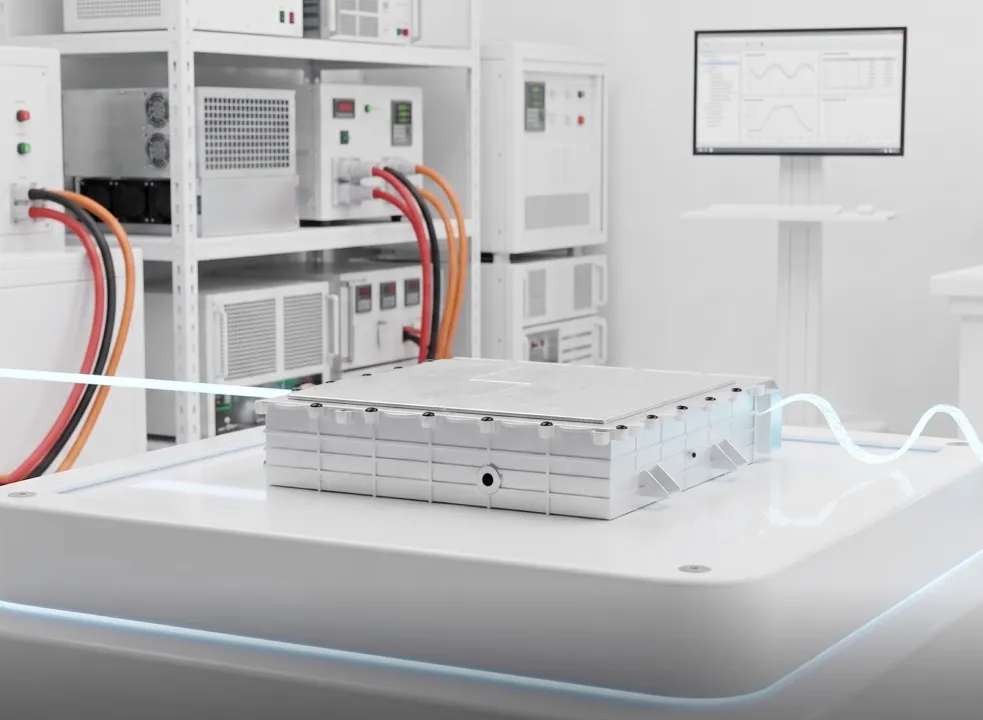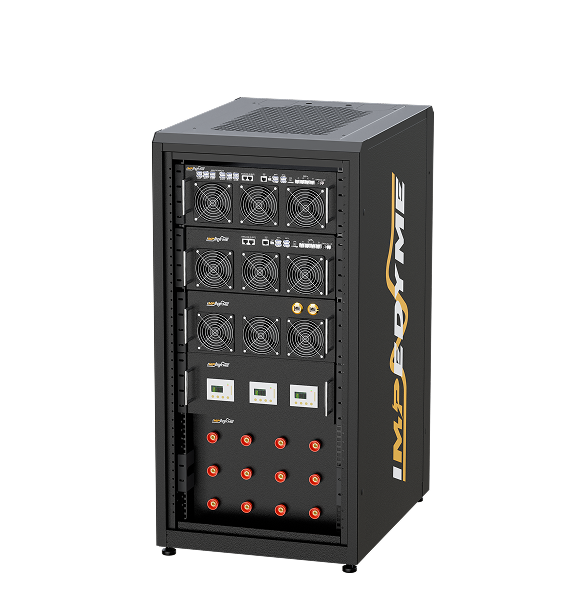


impedyme Impedyme EV HIL example cabinet testing

Electric Vehicle (EV) Simulation and Hardware-in-the-Loop (HIL) Deployment

Einführung

This project focuses on modeling an electric vehicle (EV) for simulation and Hardware-in-the-Loop (HIL) deployment. The model uses energy-based techniques to improve computational efficiency while avoiding high-frequency switching effects, making it suitable for real-time applicationsDurch die Integration advanced control algorithms, this simulation provides an efficient and scalable approach for EV powertrain testing, optimization, and validation.

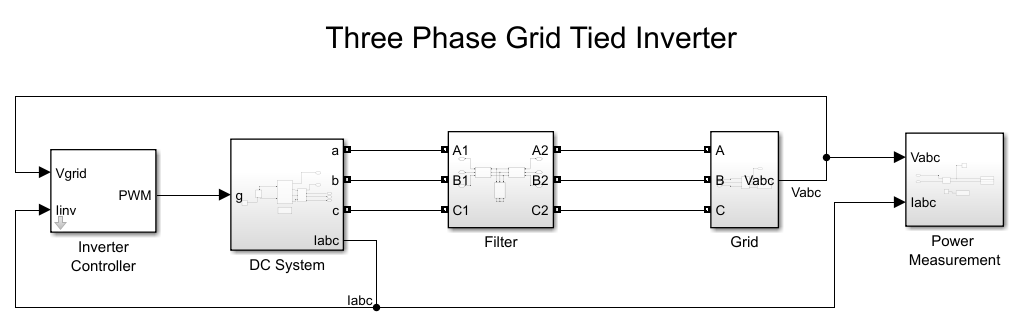
impedyme three phase grid tied inverter

Systemübersicht

What is EV Simulation and HIL Deployment?

EV simulation involves developing a digital model of an electric vehicle, including its powertrain, battery system, and control algorithms. This allows engineers to test vehicle dynamics, energy consumption, and power management strategies in einem virtual environment before hardware implementation.

HIL deployment integrates the EV model with real-time hardware, enabling real-world testing of controllers, power electronics, and drivetrain components. This approach ensures accurate validation of EV systems under dynamic conditions while reducing the need for full-scale physical prototypes.

Zweck der Simulation

Die Simulation hat folgende Ziele:

  • Analyze powertrain efficiency and energy management strategies.
  • Validate EV control algorithms in real-time using HIL techniques.
  • Assess system interactions under different driving scenarios.

Hauptmerkmale

Energy-Based Modeling for Real-Time Execution

The EV model uses an energy-based approach, eliminating high-frequency switching effects while maintaining system accuracy.
➡️ HIL/PHIL-Vorteil: Ermöglicht real-time execution with reduced computational load.

Scalable Powertrain and Battery Models

The simulation supports multiple powertrain configurations, including single-motor and dual-motor architectures.
➡️ HIL/PHIL-Vorteil: Allows seamless adaptation to various EV drivetrain topologies.

Controller and Power Electronics Integration

The system integrates motor controllers, inverters, and battery management systems (BMS) for full-system evaluation.
➡️ HIL/PHIL-Vorteil: Ermöglicht real-time validation of embedded control algorithms.

Kosteneinsparungen

Reduziert den Bedarf an physischen Prototypen und Tests und senkt dadurch die Entwicklungskosten.

Schnellere Markteinführung

Accelerates the testing and validation process, enabling faster product launches.

Verbesserte Genauigkeit

Bietet präzise und reproduzierbare Testbedingungen und gewährleistet zuverlässige Ergebnisse.

Erhöhte Sicherheit

Allows testing of extreme and fault conditions without risk to personnel or equipment.

Simulationsziele

Diese Simulation hilft bei der Bewertung von:

  • Powertrain dynamics and energy consumption under real-world driving conditions.
  • Battery charge-discharge behavior and thermal management strategies.
  • Performance of control algorithms for motor, battery, and power electronics.
    ➡️ HIL/PHIL-Vorteil: Allows safe, repeatable, and scalable testing before deployment.

Technische Beschreibung

Systemkonfiguration

  • Eingang: Drive cycle profiles (e.g., WLTP, NEDC, custom user-defined cycles).
  • Ausgang: Powertrain performance metrics (e.g., efficiency, energy consumption).
  • Testkomponenten:
    • Electric Motor: IPMSM, PMSM, or IM drive models.
    • Batteriemodell Li-ion, solid-state, or hybrid energy storage.
    • Leistungselektronik: Inverter, DC-DC converter, onboard charger.

Regelungsmethodik

  • Feldorientierte Regelung (FOC): Ensures precise motor control and efficiency.
  • Energiemanagementsystem (EMS): Optimizes power distribution in real time.
  • Battery State Estimation: Implements SOC, SOH, and thermal regulation strategies.
    ➡️ HIL/PHIL-Vorteil: Ermöglicht real-time testing and fine-tuning of EV control strategies.

Advantages of EV Simulation and HIL Deployment

  • Rapid Prototyping: Enables early-stage validation of EV components.
  • Cost-Effective Testing: Reduces reliance on physical prototypes.
  • Scalable and Modular: Supports different vehicle configurations.
    ➡️ HIL/PHIL-Vorteil: Echtzeitvalidierung real-world testing without full-scale vehicle deployment.

Anwendungen

Powertrain Development and Testing

Motor and Inverter Testing: HIL systems are used to test electric motors and inverters in real-time, validating their performance under various load and speed conditions.

Transmission and Drivetrain Testing: Simulations and HIL testing evaluate the efficiency and durability of EV transmissions and drivetrains under realistic driving scenarios.

Thermal Management: HIL systems test thermal management systems for motors, inverters, and batteries, ensu Battery Management Systems (BMS)

Battery Performance Testing

Simulations and HIL systems are used to test battery performance under different charge and discharge cycles, optimizing energy efficiency and lifespan.

State-of-Charge (SOC) Estimation: HIL testing validates BMS algorithms for accurate SOC estimation, ensuring reliable battery operation.

Fault Detection and Safety: HIL systems test BMS fault detection and safety mechanisms, improving system reliability and compliance with safety standards. ring they operate within safe temperature limits.

Vehicle Dynamics and Control Systems

Traction Control: HIL systems test and optimize traction control systems for EVs, ensuring stability and safety under various road conditions.

Torque Vectoring: Simulations and HIL testing evaluate torque vectoring systems that improve handling and performance by independently controlling the torque delivered to each wheel.

Rekuperatives Bremsen:: HIL systems test regenerative braking systems, optimizing energy Autonomous and Connected Vehicles

Autonomous Driving Systems: HIL systems test and validate autonomous driving systems under various driving scenarios, ensuring safety and reliability.

Vehicle-to-Everything (V2X) Communication: HIL testing evaluates the performance of V2X communication systems, optimizing connectivity and data exchange.

Sensor Integration: HIL systems help integrate and test sensors (e.g., radar, LiDAR, cameras) used in autonomous and connected vehicles.

 recovery and improving overall efficiency.

Thermal Management Systems

Battery Cooling: HIL systems test and optimize battery cooling systems, ensuring safe and efficient operation under high loads.

Motor and Inverter Cooling: HIL testing analyzes the thermal performance of motors and inverters, optimizing cooling system design.

Cabin Climate Control: HIL systems evaluate the energy consumption of HVAC systems, optimizing cabin climate control for comfort and efficiency.
➡️ HIL/PHIL-Vorteil: Unterstützt accurate and repeatable testing for various EV architectures.

Vorteile der Simulation

Mit dieser Simulation können Anwender:

  • Optimize motor and battery control strategies for higher efficiency.
  • Analyze the impact of different drive cycles on energy consumption.
  • Validate powertrain performance in a risk-free virtual environment.
    ➡️ HIL/PHIL-Vorteil: Bridges the gap between simulation and real-world EV validation.

Zusammenfassung

Die EV Simulation and HIL Deployment framework provides a high-fidelity environment zum testing and optimizing EV powertrain components. Die HIL- und PHIL-Lösungen von Impedyme verbessern den Entwicklungsprozess:

EntwicklungsphaseBeitrag von Impedyme
RegelungsdesignRCP using HIL for real-time validation
Test der SteuerhardwareCIL with real-time EV models
Verifizierung der LeistungsstufePHIL with actual voltage and power interaction
EndvalidierungVollständiges PHIL-System unter realistischen Fahrbedingungen

Zukünftige Erweiterungen

  • Integration of AI-based predictive control for EV energy management.
  • Advanced thermal modeling for battery and power electronics.
  • Simulation of next-generation powertrains (e.g., SiC/GaN-based inverters).


Die EV Simulation and HIL Deployment project provides a comprehensive environment for developing and validating electric vehicle powertrainsMit den HIL/PHIL-Lösungen von Impedymekönnen Ingenieure efficiency, reliability, and control strategies, accelerating the transition to next-generation EV technologies.