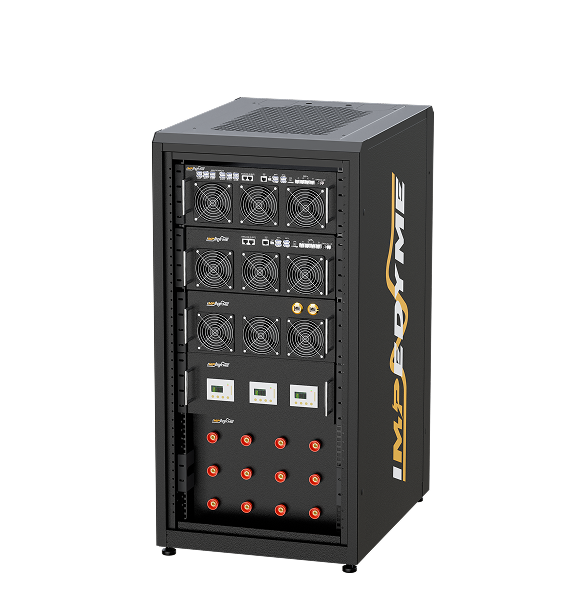

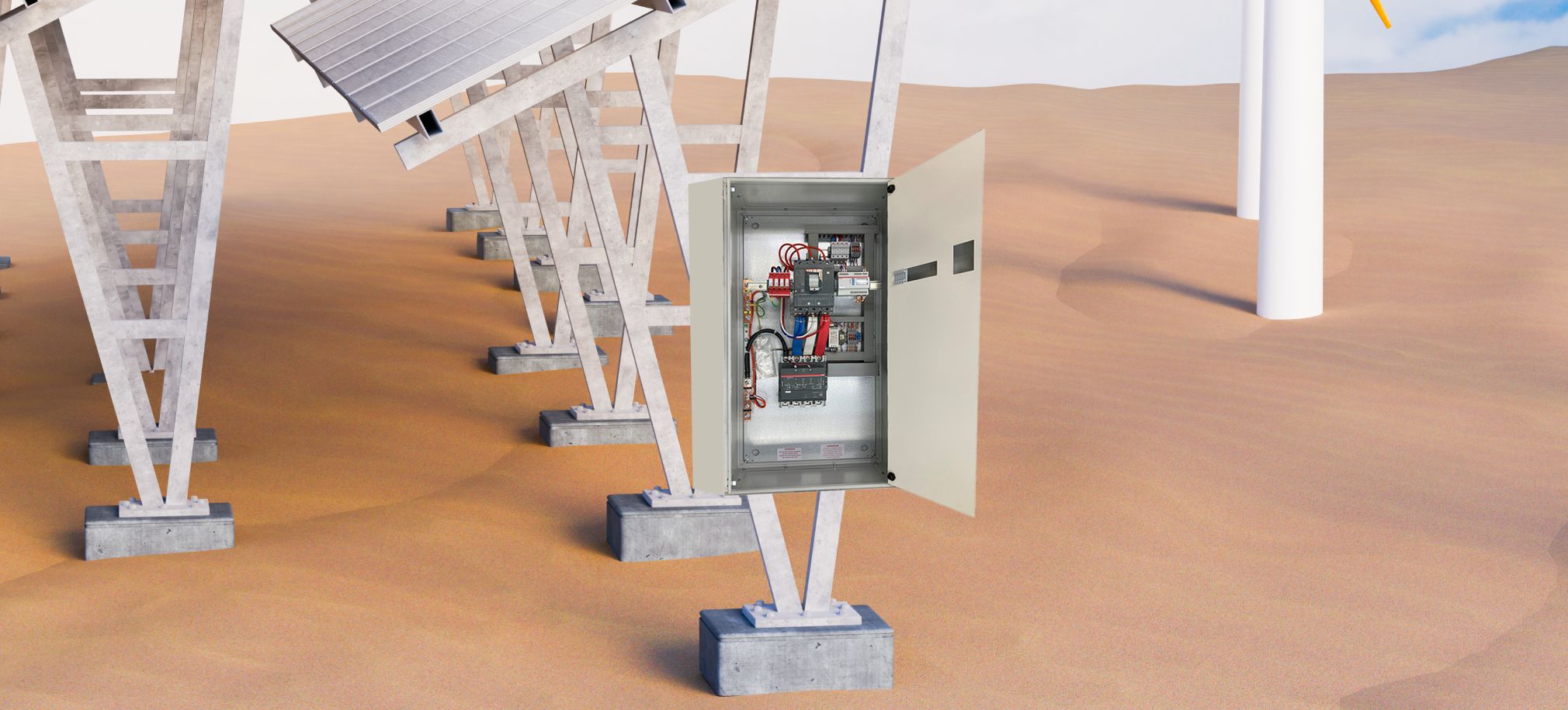
Impedyme Grid Connected Rectifier

Grid Tie Inverter: Grid-Connected Rectifier with DC-Link Voltage Control Simulation

Einführung

DC-link voltage regulation is a critical function in grid-connected power electronics systems, especially in grid tie inverter applications. It enables stable operation and efficient AC-to-DC conversion. This simulation explores a PI-based cascade control strategy applied to a grid tie inverter system using a rectifier, designed to maintain voltage stability, support power factor correction (PFC), and improve overall energy efficiency. These capabilities are vital for renewable energy systems, industrial motor drivesund HVDC transmission applications.

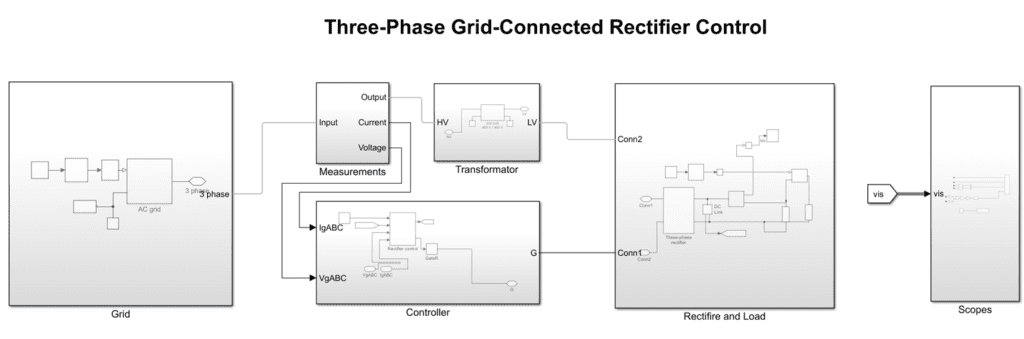
three-phase grid-connected rectifier

Systemübersicht

What is a Grid-Connected Rectifier with DC-Link Control?

Ein grid-connected rectifier (or front-end of a Wechselrichter) transforms three-phase AC power from the grid into a stable and regulated DC voltage. To ensure smooth operation and reliable output, the system uses a cascade PI controller that actively regulates both the grid-side current and the DC-link voltage. This dual-control approach improves power quality, minimizes disturbances, and supports seamless integration with downstream systems like inverters and converters.

Zweck der Simulation

This simulation is designed to assess the performance of DC-link voltage control in real-world Wechselrichter conditions. It helps engineers:

  • Analyze DC-link voltage regulation under varying load conditions.
  • Evaluate power factor correction (PFC) techniques to ensure high efficiency.
  • Validate rectifier control strategies for stable grid integration.

Hauptmerkmale

DC-Link Voltage Regulation

At the heart of this grid tie inverter system lies a PI-based cascade control architecture, designed to regulate the DC-link voltage with high precision. This layered approach allows rapid response to dynamic load changes, keeping voltage stable and improving overall reliability.

➡️ HIL/PHIL-Vorteil:: Enables real-time validation and fine-tuning of voltage control strategies before hardware deployment.

Grid-Side Current Control for Power Factor Correction (PFC)

To achieve PFC, the system implements grid-side current control that dynamically adjusts current waveforms to align with voltage phases. This reduces total harmonic distortion (THD) and ensures near-unity power factor—key for grid tie inverter efficiency.

➡️ HIL/PHIL-Vorteil:: Provides engineers the ability to test power quality improvements on real hardware under various load and fault conditions.

Rectifier with Sinusoidal Current Control

The system uses sinusoidal current control through a PWM-driven rectifier to minimize harmonic distortion and enhance conversion efficiency. By shaping the current waveform to match the input voltage, it achieves clean power injection into the grid.

➡️ HIL/PHIL-Vorteil:: Enables real-time testing of high-frequency grid tie inverter switching, validating harmonic performance pre-deployment.

Simulationsziele

The simulation validates the core control objectives of a Wechselrichter system in a virtual hardware environment:

  • Measure responsiveness and stability of DC-link voltage control under fluctuating load conditions
  • Analyze how grid-side current control affects PFC and THD
  • Benchmark multiple rectifier control strategies under simulated grid faults
    ➡️Real-time HIL/PHIL evaluations minimize deployment risks and reduce development cycles.

Technische Beschreibung

Systemkonfiguration

  • Eingang: Three-phase AC grid voltage.
  • Ausgang: Regulated DC-link voltage.
  • Leistungsstufe: PWM-controlled rectifier with DC-link capacitor.

Regelungsmethodik

  • Outer Control Loop: PI controller for DC-link voltage regulation.
  • Inner Control Loop: PI-based current control in the d-q reference frame.
  • Grid Synchronization: Phase-Locked Loop (PLL) for phase and frequency matching.
    ➡️ HIL/PHIL-Vorteil: Enables real-time tuning of control parameters.

Advantages of Grid-Connected Rectifiers (Grid Tie Inverters)

  • Stable DC-Link Voltage: Gewährleistet consistent power conversion for connected loads.
  • Improved Power Factor: Active control maintains high power quality.
  • Low Harmonic Distortion: Grid-side current shaping reduces harmonic pollution.
    ➡️ HIL/PHIL-Vorteil: Facilitates real-world testing under varying conditions.

Anwendungen

Grid tie inverters with DC-link voltage regulation are essential across industries that require stable and efficient AC-DC conversion:

Industrial Motor Drives

Variable Frequency Drives (VFDs): Grid-connected rectifiers with DC-link voltage control are used in VFDs to convert AC power from the grid into DC power, which is then inverted to control the speed of AC motors. Simulations help optimize efficiency and performance.

Pump and Fan Drives: These rectifiers are used in industrial pumps and fans to improve energy efficiency and process control.

Unterbrechungsfreie Stromversorgungen (USV)

Data Centers: Grid-connected rectifiers are used in UPS systems to provide stable DC power for servers and critical IT infrastructure. Simulations ensure reliable operation during grid disturbances.

Industrial Facilities: These rectifiers provide backup power for sensitive industrial processes, ensuring uninterrupted operation during power outages.

Elektrofahrzeug-(EV)-Ladeinfrastruktur

On-Board Chargers: Grid-connected rectifiers with DC-link voltage control are used in EV on-board chargers to convert AC power from the grid into DC power for battery charging. Simulations optimize charging efficiency and thermal management.

DC Fast Chargers: These rectifiers are used in DC fast chargers to regulate DC-link voltage, ensuring efficient and stable power transfer to EVs.

Systeme für erneuerbare Energien

Windkraftanlagen: Grid-connected rectifiers are used in wind energy systems to convert variable-frequency AC power from the generator into stable DC power for grid integration. Simulations ensure efficient power conversion and grid compatibility.

Solarenergiesysteme: Rectifiers are used in solar inverters to convert DC power from solar panels into AC power for the grid. DC-link voltage control ensures stable operation and efficient power transfer. ➡️ HIL/PHIL-Vorteil: Supports real-time emulation for different applications.

Vorteile der Simulation

Mit dieser Simulation können Anwender:

  • Analyze DC-link voltage stability and transient response.
  • Optimize control strategies for improved power quality.
  • Evaluate real-time grid interactions and dynamic performance.
    ➡️ HIL/PHIL-Vorteil: These insights enable confident transition from simulation to grid tie inverter hardware deployment using HIL/PHIL platforms.

Zusammenfassung

Die Grid Tie Inverter Simulation with DC-Link Voltage Control offers a robust platform for validating control strategies, improving power quality, and optimizing conversion efficiency. By integrating Die HIL and PHIL systems, engineers accelerate design cycles and enhance real-world reliability.

EntwicklungsphaseBeitrag von Impedyme
DC-Link Control DesignHIL-based real-time voltage regulation testing
Grid SynchronizationPHIL with real grid interaction
Power Factor OptimizationHarmonic analysis for grid compliance
Load Transient TestingReal-time response evaluation

Zukünftige Erweiterungen

  • Integration of adaptive control for enhanced voltage stability.
  • Development of AI-based power factor correction algorithms.
  • Simulation of advanced rectifier topologies (e.g., Vienna Rectifier, Multi-Level Converters).

As Impedyme evolves its simulation platforms, users will benefit from smarter automation, greater modeling flexibility, and faster Wechselrichter development cycles.