
Battery cell testing card
Battery cell testing header

Battery Cell Testing: Standards, and Modern Test Systems

Battery cell testing is the foundation of every safe, reliable, and high-performing battery product. Whether the destination is an electric vehicle, a heavy-lift drone, a grid-scale storage installation, or a consumer device, every battery pack is only as good as the individual cells inside it — and every cell must be measured, characterized, stressed, and validated before it earns its place in a product. A single weak or defective cell can compromise an entire pack containing hundreds or thousands of cells, which is why battery cell testing sits at the very start of the energy-storage value chain and never really stops, from R&D characterization through production end-of-line checks to second-life qualification.

This guide explains what battery cell testing involves, the six major families of tests engineers run, the standards that govern vehicle battery cell testing, what a complete battery cell testing system looks like, and how modern battery emulation and 电力硬件在环(PHIL) technology — including Impedyme’s BatterySim Studio and CHP Testbench platform — is transforming the way engineering teams validate cells, battery management systems, and power electronics.

What Is Battery Cell Testing?

Battery cell testing is the systematic process of measuring and stress-testing an individual electrochemical cell to quantify its capacity, power capability, efficiency, internal impedance, thermal behavior, safety margins, and durability. The cell is the smallest functional unit of any battery system, and its behavior defines the ceiling for everything built on top of it: the module, the pack, the battery management system (BMS), and ultimately the vehicle or device it powers.

The purpose of testing changes depending on where you are in the product lifecycle:

  • Research and development: Characterizing new chemistries, electrode designs, and cell formats; building the data needed for accurate cell models.
  • 设计验证: Confirming that a candidate cell meets the energy, power, lifetime, and safety requirements of the target application.
  • Qualification and certification: Demonstrating compliance with international safety and transport standards before a cell can ship or be installed in a vehicle.
  • Production quality control: Catching manufacturing defects at end-of-line before cells enter modules and packs.
  • In-service and second-life assessment: Measuring state of health (SOH) to support warranty decisions, repurposing, and recycling.

The stakes differ by application, but the discipline is shared. In electric vehicles, battery cell testing underwrites driving range, fast-charge capability, warranty life, and crash safety. In drones and eVTOL aircraft, cells are pushed to extreme discharge rates far beyond automotive duty, so testing must verify both high power density and survivability under repeated high-strain pulses. In stationary grid storage, the priorities shift to cycle life, round-trip efficiency, and low self-discharge across thousands of cycles. In consumer electronics, the focus is energy density, safety in confined enclosures, and transport compliance. Across all of these, battery cell testing is what converts a chemistry recipe into a qualified, certifiable, bankable product.

Why Battery Cell Testing Matters

Lithium-ion cells store a remarkable amount of energy in a small volume, and that energy density is precisely what makes rigorous testing non-negotiable. The consequences of inadequate testing show up in three ways:

安全性. Internal short circuits, lithium plating, separator damage, and thermal abuse can all trigger thermal runaway — a self-accelerating exothermic reaction that can lead to venting, fire, or explosion. Abuse testing exists to characterize exactly how a cell fails and to verify that it fails as gracefully as possible.

Performance and reliability. Capacity, internal resistance, and efficiency vary from cell to cell and drift with age. Without accurate characterization, a BMS cannot estimate state of charge (SOC) or SOH correctly, pack sizing becomes guesswork, and field performance disappoints.

Cost and time-to-market. Battery development programs live or die on test throughput. Aging tests run for months; abuse tests destroy expensive cells; safety incidents in the lab halt entire programs. Every improvement in test speed, repeatability, and safety translates directly into faster development cycles and lower cost.

battery management testing picture

The Six Families of Battery Cell Tests

A complete battery cell testing program spans six categories. Each answers a different engineering question, and a serious validation campaign touches all of them.

1. Electrical Characterization

Electrical characterization establishes the baseline electrical fingerprint of a cell — the data every model, BMS algorithm, and pack design depends on.

Capacity and energy testing. The cell is charged under a controlled protocol (typically constant current followed by constant voltage, CC-CV) and then discharged at a defined rate to a cut-off voltage. Integrating current over time yields capacity in ampere-hours; multiplying by voltage yields energy in watt-hours. Measured capacity is compared against the rated value to flag defects, and capacity retention over time is the primary definition of state of health.

Open-circuit voltage (OCV) mapping. OCV is the resting terminal voltage after the cell has relaxed with no load. Because OCV correlates with SOC, engineers construct an OCV-versus-SOC curve by stepping the cell through small charge or discharge increments with rest periods between each step. This curve is foundational: the BMS relies on it for SOC estimation, and any error here propagates into every downstream calculation.

Internal resistance and impedance. DC internal resistance (DCIR) is measured by applying a current pulse and observing the instantaneous voltage response; AC internal resistance (ACIR) uses a small alternating excitation at a single frequency. Internal resistance is one of the strongest early indicators of degradation — significant growth above the baseline value correlates strongly with capacity fade, power loss, and increasing thermal risk.

Electrochemical Impedance Spectroscopy (EIS). EIS applies a small sinusoidal excitation across a wide frequency range — from the milli-hertz region up to tens of kilohertz — and records the complex impedance response, typically visualized as Nyquist and Bode plots. Because different electrochemical processes respond at different frequencies, EIS can separate ohmic resistance, charge-transfer resistance, double-layer capacitance, and diffusion behavior. It detects subtle aging signatures that simple DC measurements miss, making it one of the most information-rich diagnostics in battery cell testing.

Hybrid Pulse Power Characterization (HPPC). HPPC applies a structured sequence of discharge and charge current pulses at successive SOC points, often repeated across multiple temperatures. From the voltage response, engineers extract equivalent-circuit-model (ECM) parameters — series resistance, polarization resistances, and time constants — producing a complete map of resistance and available power versus SOC and temperature. This map is exactly what a BMS needs for power-limit calculations and exactly what a real-time cell model needs for accurate emulation.

2. Performance Testing

Performance testing answers the question: how does the cell behave under realistic and demanding duty cycles?

  • Charge/discharge cycling under defined protocols measures delivered capacity and energy repeatably, establishing the reference behavior of the cell.
  • C-rate testing evaluates the cell across charge and discharge rates — for example 0.2C, 0.5C, 1C, 2C, and beyond. Higher rates expose voltage sag under load, increased heat generation, and rate-dependent capacity reduction. For drone and eVTOL cells, where discharge pulses can reach extreme multiples of rated capacity, high-rate testing is the difference between a propulsion battery that survives and one that fails abruptly mid-mission.
  • Efficiency testing captures coulombic efficiency (charge delivered divided by charge accepted, typically above 99% for a healthy lithium-ion cell) and energy efficiency, which is always lower because it accounts for the voltage gap between charge and discharge and falls as C-rate rises. High-precision coulombic efficiency measurement is also a powerful, time-efficient predictor of long-term durability — small inefficiencies measured over a few cycles correlate with degradation that would otherwise take months of cycling to observe.
  • Drive-cycle and mission-profile testing replays realistic load profiles — an urban driving cycle, a fast-charge event, a drone climb-and-hover mission — to validate the cell under the dynamic conditions it will actually see.

3. Lifecycle and Aging Testing

Aging testing predicts how long a cell will last and how it will degrade. Degradation occurs through two coupled modes:

  • Cycle aging results from active use. Repeated lithium insertion and extraction causes mechanical stress and particle cracking in the electrodes, while charging at high rates or low temperatures promotes lithium plating on the anode — metallic lithium deposits that consume cyclable lithium and, in the worst case, grow dendrites capable of piercing the separator.
  • Calendar aging occurs even at rest. The dominant mechanism is continued growth of the solid-electrolyte interphase (SEI) layer on the anode, which consumes lithium inventory. Calendar aging accelerates at high storage SOC and elevated temperature, which is why storage conditions matter so much for fleet and warehouse logistics.

The industry-standard definition of end-of-life is the point at which a cell’s capacity falls to 80% of its initial rated value (or its power capability falls to 80% of the original specification). Cycle-life testing runs cells through repeated full or partial cycles until they cross that threshold, while calendar-life testing stores cells at controlled SOC and temperature and periodically interrupts storage to run reference performance tests — capacity, HPPC, and EIS — that track the degradation trajectory. Because real-time aging takes months to years, accelerated aging protocols, careful statistical design, and degradation modeling are essential parts of any serious lifecycle program.

4. Environmental Testing

Environmental testing subjects cells to the climatic stresses they will encounter in the field, typically using environmental chambers that control temperature and humidity, sometimes combined with altitude and vibration:

  • Thermal cycling between temperature extremes — commonly spanning ranges such as −40 °C to +85 °C — reveals mechanical fatigue, seal degradation, and connection failures driven by repeated expansion and contraction.
  • Temperature-extreme characterization measures capacity and internal resistance at hot and cold limits. Cold sharply increases internal resistance and lithium-plating risk during charging; heat accelerates every degradation mechanism and reduces the margin to thermal runaway.
  • Humidity testing evaluates corrosion, insulation breakdown, and short-circuit risk in damp environments.
  • Altitude and low-pressure testing simulates air transport and high-elevation operation, and is a required element of transport qualification.

5. Abuse and Safety Testing

Abuse testing deliberately drives cells beyond their safe operating limits to characterize failure behavior and verify that protective mechanisms work. These tests are destructive and are conducted in reinforced test cells with exhaust, fire-suppression, and remote-monitoring infrastructure. They fall into three categories:

  • Electrical abuse: overcharge, over-discharge (forced discharge into voltage reversal), and external short circuit. These tests probe how the cell and its internal protective devices respond to electrical fault conditions.
  • Thermal abuse: thermal-stability (hot oven) tests, controlled heating to the onset of thermal runaway, and — critically for pack design — thermal-runaway propagation testing that characterizes whether and how a runaway event spreads from one cell to its neighbors.
  • Mechanical abuse: nail penetration (driving a conductive nail through the cell to create an internal short circuit), crush, impact, and drop testing, all performed under precisely defined loading rates and force limits so that results are comparable across labs and programs.

The unifying objective of abuse testing is not to prevent failure — under sufficient abuse, every cell fails — but to ensure the cell fails as safely as possible, without violent thermal runaway, fire, or explosion, and that any single-cell event can be contained at the pack level.

6. Mechanical and Vibration Testing

Vibration and mechanical-shock testing validate that cells survive the dynamic loads of transport and operation. Cells, modules, or packs are mounted to a vibration table — frequently installed inside an environmental chamber so thermal stress can be superimposed — and excited across three axes with standardized random and sinusoidal profiles while voltage, temperature, and mechanical integrity are continuously monitored. The failure modes of interest are internal damage, loss of electrical contact, and seal breach, any of which can turn into a safety issue later in service.

Structural Mechanical Integrity and Interface Stress Dynamics

Lithium-ion cells are dynamic mechanical systems. As lithium ions intercalate and de-intercalate within the host matrices of the anode and cathode during charge and discharge cycles, the host materials undergo volumetric changes that lead to macroscopic expansion and contraction of the entire cell structure.

In Operando Mechanical Pressure Mapping

To optimize electrical contact, prevent active layer delamination, and control thickness changes in pouch and prismatic cells, the cells are typically integrated into modules under mechanical compression. However, an uneven distribution of this external pressure can accelerate capacity fade and lead to localized failure.

Using ultra-thin, matrix-based piezoresistive pressure mapping grids integrated directly within temperature-controlled pouch cell testing fixtures, engineers can evaluate pressure distributions in operando. These studies reveal critical structural characteristics:

  • Local High-Pressure Concentrations (“Hot Spots”): Without flexible compensation layers, pressure maps show that compression forces concentrate on highly localized zones of slightly elevated thickness, such as the areas where current collector tabs are welded to the foils and where the internal jelly roll is folded. These mechanical hot spots experience accelerated local aging. Introducing flexible foam compression pads (compliance layers) distributes the forces evenly across the cell surface, mitigating stress concentrations.
  • Constant Volume vs. Constant Pressure Cycling:
    • In Constant Volume Mode, the cell is locked at a fixed thickness using rigid plates. As graphite undergoes phase transitions during lithiation, the cell’s internal expansion causes mechanical pressure to fluctuate dynamically by up to 40% (e.g., from a baseline of 0.9 MPa at 0% state of charge to 1.3 MPa at 100% state of charge).
    • In Constant Pressure Mode, an active servo-drive system dynamically regulates the compression plates, keeping the force distribution stable within 0.1% while allowing the cell thickness to vary to accommodate internal expansion.

The table below summarizes the key trade-offs between Constant Volume and Constant Pressure cycling modes evaluated during vehicle battery cell testing :

Parameter EvaluatedConstant Volume ModeConstant Pressure Mode
Physical ConstraintsLocked cell thickness; variable external pressure.Active regulation of external force; variable cell thickness.
Pressure VariationsFluctuates up to 40% (e.g., 0.9 MPa to 1.3 MPa for LFP cells).Remains stable within 0.1% throughout charge-discharge cycles.
Primary Degradation DriversHigh mechanical stress concentrations at full state of charge, driving binder fracturing and SEI cracking.Macroscopic friction and layer movement, potentially causing separator wear.
Testing UtilityReplicates rigid module constraint environments found in standard automotive battery packs.Measures the fundamental material swelling profile and solid-state phase transitions of active materials.

Non-Destructive Computed Tomography

To inspect internal structural alignment and identify manufacturing anomalies without destroying the cell, modern development programs rely on high-resolution Computed Tomography (CT) scanning. This technology uses non-destructive X-ray imaging to reconstruct a highly detailed three-dimensional model of the cell’s internal structure :

  • Cylindrical Form Factors: CT imaging validates the concentric winding of active layers, electrode tab positions, safety vent integrity, and central core buckling risk under high expansion forces.
  • Pouch and Prismatic Form Factors: CT scans inspect the alignment of stacked layers, looking for “waviness” in the electrode coatings. These layer waviness defects can restrict regional ionic transport, leading to localized lithium plating, capacity loss, and internal short-circuit hazards over extended cycling.

Component-Level Mechanical Characterization

Comprehensive mechanical characterization is necessary to parameterize multiphysics finite element models of battery cells, ensuring that pack-level mechanical designs can withstand high-rate vehicle dynamics. These mechanical characterizations are performed across an operating temperature range of -80 °C to +250 °C to simulate absolute environmental and crash conditions :

ComponentTest SuitePhysical Metric MeasuredEngineering Significance
Separators & Foil CollectorsUniaxial Tensile StrengthPeak tensile load, yield strength, and percentage elongation under tension using video extensometers.Prevents separator tearing and foil cracking during high-speed manufacturing winding and extreme pack-level vibration.
Active Coating Interfaces180-degree and 90-degree peel / Z-Direction TensileAdhesion and cohesion energy of the active material mixture on the current collector foil.Predicts electrode active layer delamination and binder fracturing caused by dynamic cycling and expansion.
Coated Electrodes2-Point & 3-Point BendingBending stiffness, flexural modulus, and localized structural failure boundaries.Informs mechanical models of jelly-roll deformation under impact and external crash forces.
Separator MaterialsPuncture ResistancePeak force required for a hemispherical probe to penetrate the polymer separator foil.Evaluates separator resistance to penetration by localized lithium dendrites or surface burrs on current collectors.
Electrode CoatingsHigh-Precision CompressibilityThickness displacement versus compressive stress, determining elastic and plastic deformation boundaries.Informs finite element modeling of cell expansion forces under constant volume constraints.
Inter-Cell ConnectionsTab and Terminal Shear / Weld StrengthUltimate shear force and weld interface failure energy under stress.Validates ultrasonic and laser weld integrity against vehicle-level shock and vibration profiles.

Vehicle Battery Cell Testing: Standards and Requirements

Vehicle battery cell testing is the most demanding and most heavily standardized branch of the discipline. Automotive cells must deliver high energy and power simultaneously, survive a decade or more of daily use, pass crash and abuse scenarios, operate from arctic cold to desert heat, and qualify for global transport. To manage that complexity, engineers navigate a layered landscape of international standards:

  • ISO 12405 — test specification for lithium-ion traction battery packs and systems, covering performance, reliability, and abuse, with separate parts addressing high-power and high-energy applications and safety requirements.
  • ISO 6469 — electrical safety requirements for electrically propelled road vehicles, including the rechargeable energy storage system.
  • UN 38.3 — the mandatory transport-safety qualification for lithium cells and batteries, comprising altitude simulation, thermal cycling, vibration, shock, external short circuit, impact/crush, overcharge, and forced discharge.
  • UL 2580 — safety evaluation of EV battery systems, covering the complete pack including cells, modules, thermal management, and BMS integration, with electrical, mechanical, and environmental abuse tests.
  • SAE J2464 — a widely referenced abuse-testing procedure for rechargeable energy storage systems, defining electrical, thermal, and mechanical abuse tests at cell, module, and pack level.
  • SAE J2380 — vibration durability testing for traction batteries.
  • IEC 62660 — the cell-level series for road-vehicle lithium-ion cells: performance and endurance testing in Part 1, reliability and abuse testing in Part 2.
  • GB/T standards — national requirements for major markets that include particularly stringent cell-level safety items such as nail penetration testing.

These standards are not interchangeable. They target different levels of integration — cell, module, pack, system, vehicle — and different priorities: performance versus abuse safety versus transport. A robust vehicle battery cell testing program begins by mapping every applicable requirement to the correct test level and building a traceable compliance matrix, because gaps discovered late in a vehicle program are extraordinarily expensive to close.

The Cell-to-Pack Validation Workflow

Vehicle battery validation proceeds in stages, and cell testing feeds every one of them:

  1. Cell qualification. Individual cells are characterized (capacity, OCV, DCIR, HPPC, EIS) and sample populations undergo safety, environmental, and lifecycle testing.
  2. Model parameterization. Cell characterization data is used to build and parameterize equivalent-circuit and electrochemical models — the mathematical core of both the BMS algorithms and any real-time emulation.
  3. Module validation. Cells are assembled into modules, where balancing behavior, thermal gradients, busbar performance, and inter-cell propagation are validated.
  4. Pack and BMS validation. The full pack and the complete BMS — cell-monitoring circuits, the battery control unit, contactors, pre-charge circuits, current sensing, isolation monitoring, and high-voltage interlocks — are validated as a system.
  5. Vehicle integration. The pack is validated against the charger, the traction inverter, the DC-DC converter, and the thermal system under real drive cycles and charge events.

A modern EV pack can contain several hundred to several thousand cells, and the BMS must manage the inevitable variation among them — balancing SOC, enforcing voltage and temperature limits, and detecting faults before they escalate. Validating BMS behavior across the near-infinite combinations of cell states, fault conditions, temperatures, and aging levels is one of the hardest problems in the entire workflow. It is also precisely the problem that battery emulation solves, as we’ll see below.

Battery Chemistry Considerations in Cell Testing

Test strategy must be tailored to chemistry, because each chemistry brings its own voltage window, thermal limits, degradation modes, and safety profile:

  • NMC (nickel-manganese-cobalt): High energy density and the workhorse of long-range EVs. Thermal stability decreases as nickel content rises, so thermal characterization and abuse testing carry extra weight for nickel-rich variants.
  • NCA (nickel-cobalt-aluminum): Very high energy and power density. Shares the thermal-management demands of other nickel-rich chemistries and requires equally rigorous abuse characterization.
  • LFP (lithium iron phosphate): Lower energy density and nominal voltage, but the safest mainstream lithium chemistry and among the longest-cycling. Its famously flat OCV-versus-SOC curve makes SOC estimation genuinely difficult, which raises the bar for OCV characterization accuracy and BMS validation depth.
  • Solid-state: Replaces the flammable liquid electrolyte with a solid, promising higher energy density and improved intrinsic safety. Testing must address new behaviors — interface impedance, stack-pressure sensitivity, and different thermal failure signatures.
  • Sodium-ion: Lower energy density but built from abundant, low-cost materials with strong temperature-extreme performance. It introduces its own OCV characteristics, rate behavior, and aging mechanisms that test programs must capture from scratch.

A capable test platform must span chemistries rather than being locked to one. Impedyme’s BatterySim Studio, for example, models lithium-ion chemistries including NMC, NCA, and LFP as well as emerging solid-state formulations at cell, module, and pack level within a single environment — so a team can move between chemistries without rebuilding its test infrastructure.

What Makes a Complete Battery Cell Testing System

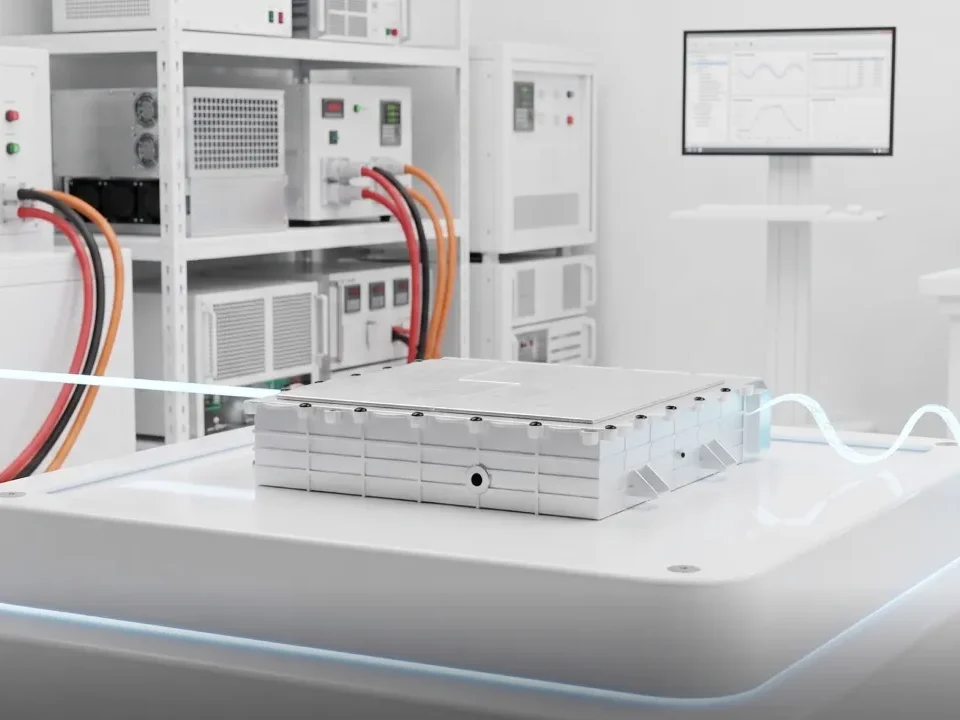
A battery cell testing system is an integrated testbed, not a single instrument. A complete system brings together:

  • Battery cyclers — programmable bidirectional power channels that charge and discharge cells under defined profiles while recording voltage, current, capacity, energy, and temperature. Modern cyclers are increasingly regenerative, returning discharge energy to the grid or to other channels instead of burning it off as heat, which dramatically reduces energy cost and lab cooling load.
  • Environmental chambers — temperature and humidity control around the cell under test, with safety features appropriate for lithium-ion work.
  • Impedance and EIS instrumentation — frequency-domain diagnostics for deep electrochemical insight.
  • BMS test interfaces — cell-voltage emulation, temperature- and current-sensor simulation, fault-insertion capability, and communication buses connecting to the controller under test.
  • Data acquisition and automation software — the orchestration layer that runs multi-channel, multi-month campaigns, manages data, and generates reports.
  • Safety infrastructure — over-voltage, over-current, and over-temperature protection, smoke and gas detection, and emergency shutdown paths.

Key Specifications to Evaluate

When selecting a battery cell testing system, the specifications that matter most are:

  • Voltage and current range, matched to the device under test — from single cells at a few volts to full packs at 400 V, 800 V, and beyond.
  • Measurement accuracy and resolution. High-end systems specify accuracy on the order of hundredths of a percent of full scale. This matters because tiny measurement errors compound over thousands of cycles and directly corrupt SOH and efficiency analysis.
  • Sampling rate and control bandwidth, sufficient for the dynamics of interest. Slow grid-storage cycling tolerates slow sampling; millisecond-scale drone propulsion pulses and fast-charge transients do not.
  • Channel count and independence, so multiple cells can run different protocols in parallel — essential when individual aging tests occupy a channel for months.
  • Regenerative, bidirectional power capability, for energy efficiency and for realistic charge/discharge behavior at full power.
  • Integration and openness — the ability to coordinate cyclers, chambers, EIS, and BMS interfaces under one automation layer, ideally with native MATLAB/Simulink integration so models flow directly from design into test.

The decisive question in modern lab planning, however, is no longer just “which cycler?” It is “which architecture?” — because the most significant advance in battery cell testing in the past decade is not a better cycler. It is the ability to emulate the battery itself.

Battery Emulation and PHIL: The Modern Approach to Battery Cell Testing

The most important evolution in battery cell testing is the shift from testing only physical cells to also emulating cells, modules, and complete packs in real time. A battery emulator is a programmable, bidirectional power system that electronically reproduces a battery’s terminal behavior — voltage as a function of SOC, internal resistance, dynamic polarization, power limits, and thermal coupling — sourcing real current on discharge and sinking real current on charge, with no physical cell present. When the emulator is driven by a high-fidelity real-time model and connected to actual power hardware through a regenerative converter, the methodology is called Power Hardware-in-the-Loop, or PHIL.

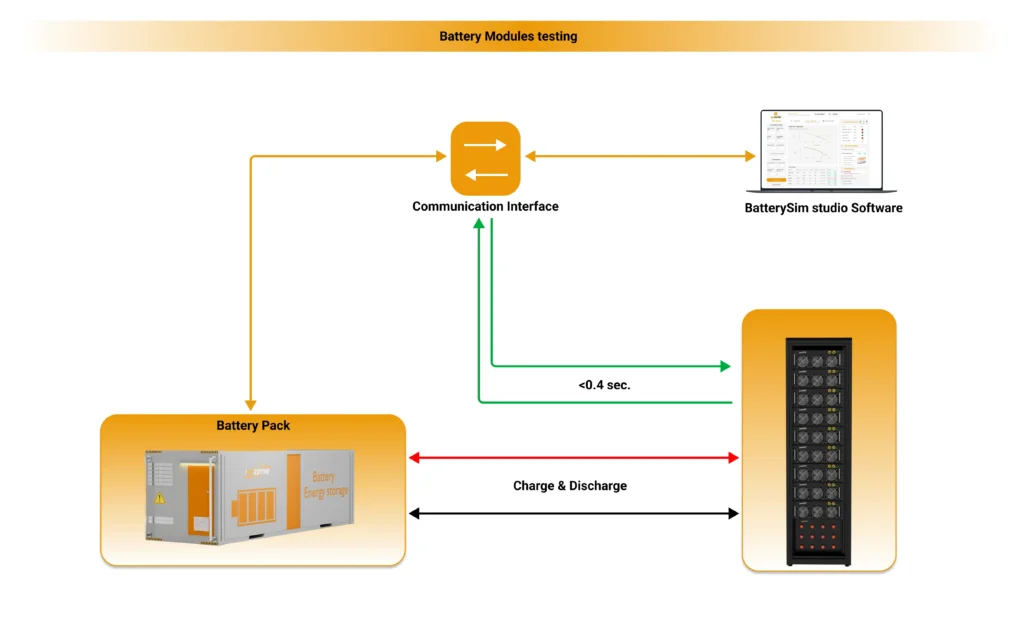
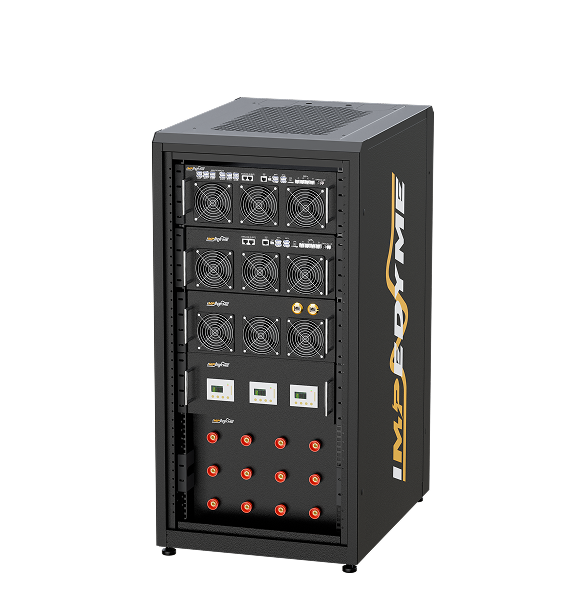
This is the core of Impedyme’s approach. Impedyme builds FPGA-based PHIL systems and Combined HIL-and-Power (CHP) platforms, and its BatterySim Studio software turns that hardware into a complete battery emulation and testing environment. The architecture is what makes it work: the battery model executes on Impedyme’s FPGA-based real-time hardware with model update rates fast enough to reproduce genuine electrical dynamics — not a slow approximation, but a physics-aware cell, module, or pack model running at nanosecond-class time steps and driving a fully regenerative power stage. The emulated battery connects directly to the real device under test: a BMS, a traction inverter, an on-board charger, a DC fast charger, or a DC-DC converter, all operating at production voltage and current.

Why Emulation Transforms the Battery Cell Testing Workflow

Safety without compromise. Overcharge, over-discharge, internal short circuits, ground faults, sensor failures, and thermal-runaway precursor scenarios can be scripted, executed, and replayed thousands of times — because there is no physical cell to vent, ignite, or destroy. The test team validates exactly how the BMS and power electronics respond to the most dangerous conditions a battery can produce, with zero cells at risk.

Speed and perfect repeatability. With a physical cell, reaching a specific test condition means hours of charging or discharging, followed by rest periods, with no guarantee the cell is in an identical state for the next run. With emulation, SOC, OCV, internal resistance, temperature behavior, and aging state change instantly and exactly. A regression suite covering hundreds of fault permutations runs overnight instead of consuming a quarter of physical lab time.

Edge cases physical cells cannot provide. How does the BMS respond to one aged cell among fresh ones? To a developing micro-short? To a cell whose impedance has doubled? To a pack with a deliberately induced SOC imbalance across modules? Staging these conditions with real cells is slow, expensive, sometimes dangerous, and never exactly reproducible. With BatterySim Studio, they are parameters in a test script.

Characterization and emulation in one loop. BatterySim Studio integrates EIS capability with automated equivalent-circuit-model fitting — Randles, Thevenin, multi-RC, and higher-order model structures with SOC-, SOH-, and temperature-dependent parameters. Data measured from real cells parameterizes the models; the models then drive the emulator; and the entire workflow lives in a MATLAB/Simulink-native environment, so the same model moves seamlessly between offline simulation, real-time HIL, and full-power PHIL.

The Impedyme Battery Cell Testing Ecosystem

Impedyme’s product family extends this methodology across the entire electrified powertrain and lab:

  • BatterySim Studio — real-time battery cell, module, and pack emulation with integrated EIS and ECM fitting, for BMS validation, charger testing, and powertrain integration.
  • CHP Testbench — the FPGA-based real-time platform combining signal-level HIL and full-power PHIL in one regenerative system, available in CHP-150 half-cabinet and CHP 300 full-cabinet configurations and scalable through paralleling for higher power levels.
  • PowerHIL Studio, — the orchestration and automation layer that configures hardware, scripts test campaigns, and coordinates multi-emulator setups from a single MATLAB-integrated environment.
  • GridSim Studio — grid emulation, so a battery system can be validated against realistic grid conditions, disturbances, and standards-driven grid-code scenarios.
  • MotorSim Studio — motor and drive emulation, allowing a battery or BMS to be tested against an emulated traction load with realistic regenerative braking dynamics.
  • 充电箱 — dedicated EV charging validation, exercising on-board chargers and DC fast-charging equipment against emulated 400 V and 800 V packs.
  • DroneSim Studio — propulsion emulation for UAV and eVTOL programs, where high-C-rate battery behavior and motor dynamics must be validated together without flying hardware.

Because every power stage in the family is regenerative and bidirectional, full-power testing recirculates energy rather than dissipating it — cutting operating cost, heat load, and facility requirements at the same time.

Emulation Complements Physical Testing — It Doesn’t Replace It

It is worth being precise: battery emulation does not eliminate physical battery cell testing. Physical characterization, abuse, environmental, and lifecycle testing remain essential, because only real cells can generate the ground-truth chemistry data and the certified safety evidence that standards demand. What emulation does is multiply the value of that physical data. Once a chemistry has been characterized and its model parameterized, that knowledge can be replayed across thousands of BMS and power-electronics test scenarios — safely, instantly, and identically every time. The physical lab focuses on what only physical cells can prove; the PHIL lab covers the combinatorial explosion of validation scenarios that physical cells never could. Together, they form a battery cell testing system that is faster, safer, and far more thorough than either alone.

Best Practices in Battery Cell Testing

Decades of collective industry experience distill into a handful of principles that separate strong test programs from weak ones:

  • Control temperature obsessively. Temperature confounds nearly every electrical measurement. Characterize at controlled, documented temperatures, and always record cell temperature alongside electrical data.
  • Combine time-domain and frequency-domain methods. HPPC and DCIR are fast and intuitive; EIS sees what they cannot. Programs that use both catch degradation earlier and parameterize better models.
  • Track internal resistance as an early-warning metric. Resistance growth typically precedes visible capacity fade and is a leading indicator of both performance loss and safety risk.
  • Anchor everything to the 80% end-of-life definition. Consistent thresholds make data comparable across programs, suppliers, and time.
  • Use rest periods correctly. OCV measurements and reference tests require genuine relaxation; rushing them corrupts the SOC mapping that everything else depends on.
  • Couple cell characterization directly to BMS validation. The cell data should flow into BMS parameters and into the emulation models used to validate those parameters — one continuous pipeline, not two disconnected projects.
  • Automate ruthlessly. Long-duration campaigns succeed or fail on automation quality: scripted protocols, automatic data validation, and alarm-driven monitoring.

结论

Battery cell testing is where energy-storage products are truly made or broken. A rigorous program spans electrical characterization, performance testing, lifecycle and aging studies, environmental qualification, abuse and safety testing, and mechanical validation — and for vehicle battery cell testing, it must map cleanly onto a demanding stack of international standards from cell level to full pack. The equipment side of the equation has evolved just as far: a modern battery cell testing system is an integrated, automated, regenerative testbed in which battery emulation and Power Hardware-in-the-Loop now carry much of the validation load that physical cells once bore alone.

That is the gap Impedyme was built to close. With BatterySim Studio running physics-aware, real-time battery models on FPGA-based CHP hardware — supported by PowerHIL Studio orchestration, GridSim Studio and MotorSim Studio emulation, the Charger Box for EV charging validation, and CHP-150 and CHP 300 testbench configurations — engineering teams can characterize real cells, parameterize accurate models, and then validate BMS firmware and power electronics against emulated cells, modules, and full packs safely, repeatably, and at full power. The result is a battery cell testing workflow that is faster to run, safer to operate, and dramatically broader in coverage — exactly what the next generation of electric vehicles, drones, and energy-storage systems demands.

Frequently Asked Questions

What are the main types of battery cell tests?
Six families: electrical characterization, performance, lifecycle/aging, environmental, abuse and safety, and mechanical/vibration testing.

What is EIS, and why does it matter?
Electrochemical Impedance Spectroscopy applies a small sinusoidal excitation across a wide frequency range to separate ohmic, charge-transfer, and diffusion behavior. It catches aging signatures DC measurements miss.

What is the difference between cycle aging and calendar aging?
Cycle aging comes from active use (electrode stress, lithium plating). Calendar aging happens at rest, driven mainly by SEI growth — and accelerates at high storage SOC and temperature.

Can battery emulation replace physical cell testing?
No. Only real cells generate ground-truth chemistry data and certified safety evidence. Emulation multiplies that data’s value by replaying it across thousands of BMS and power-electronics scenarios safely and identically.

What specifications matter most when choosing a system?
Voltage/current range, measurement accuracy, sampling rate and bandwidth, channel count and independence, regenerative bidirectional power, and MATLAB/Simulink integration.