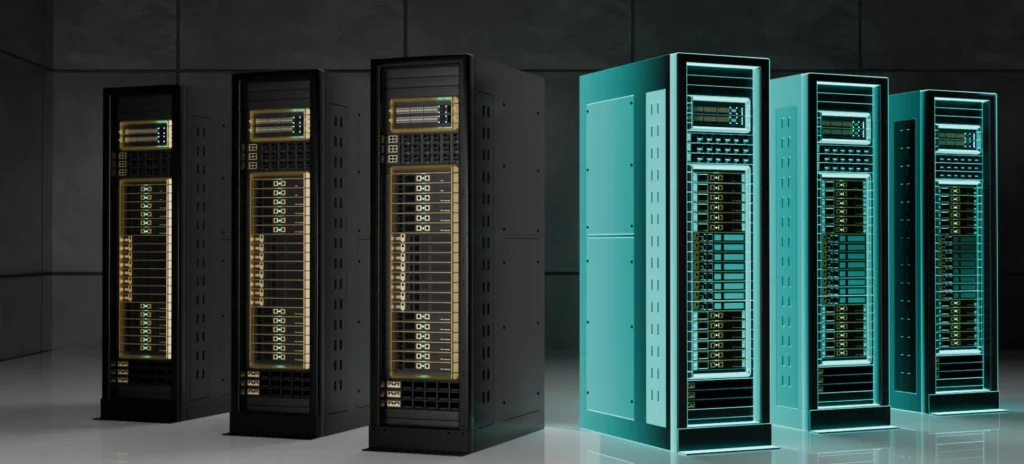

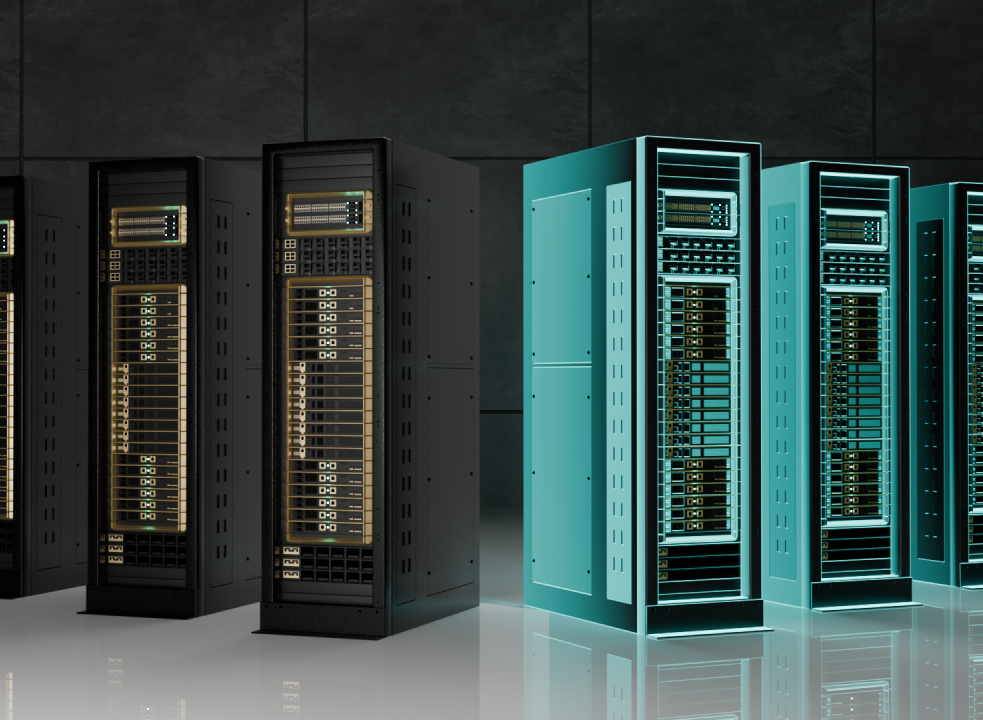
As hyperscale data centers scale to meet AI and cloud computing demand, the Powershelf — the AC-to-DC conversion stage that feeds server racks — has become one of the most power-dense and performance-critical components in the facility. A single Powershelf failure or underperformance event can cascade across thousands of compute nodes.
Yet traditional Powershelf test setups rely on passive resistive loads, fixed AC sources, and disconnected measurement instruments. These approaches cannot replicate the dynamic electrical environment a Powershelf experiences in a live data center — and they are blind to many of the failure modes that only emerge under real operating conditions.
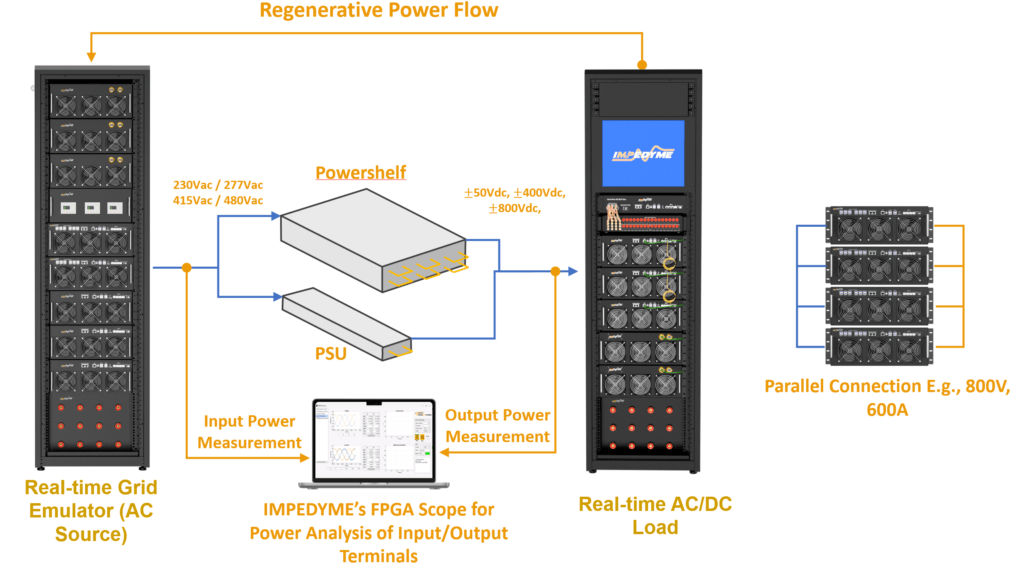
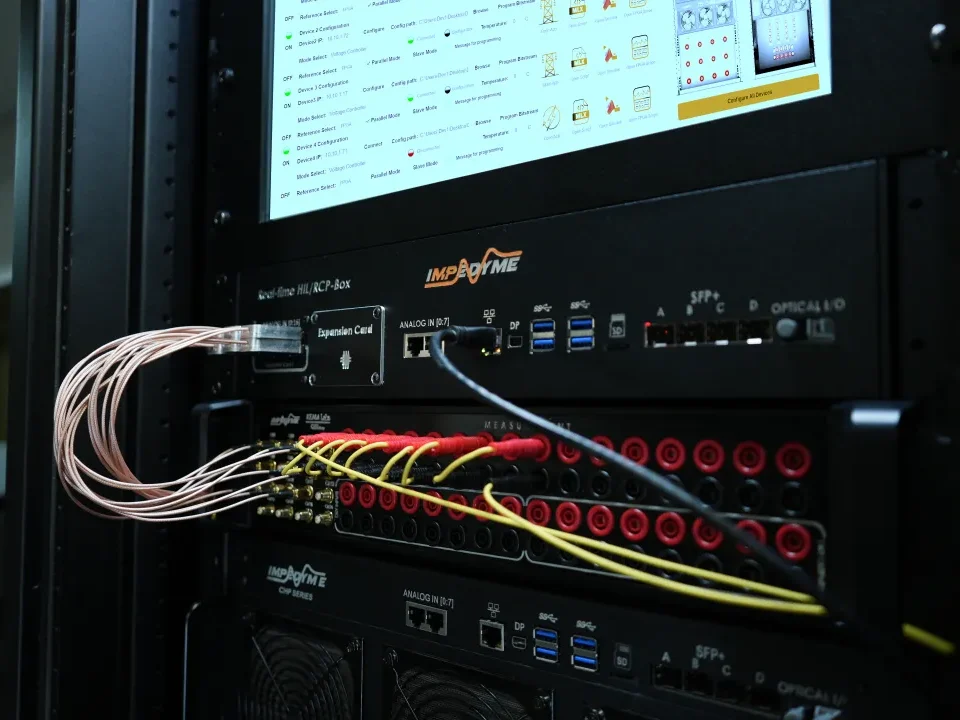
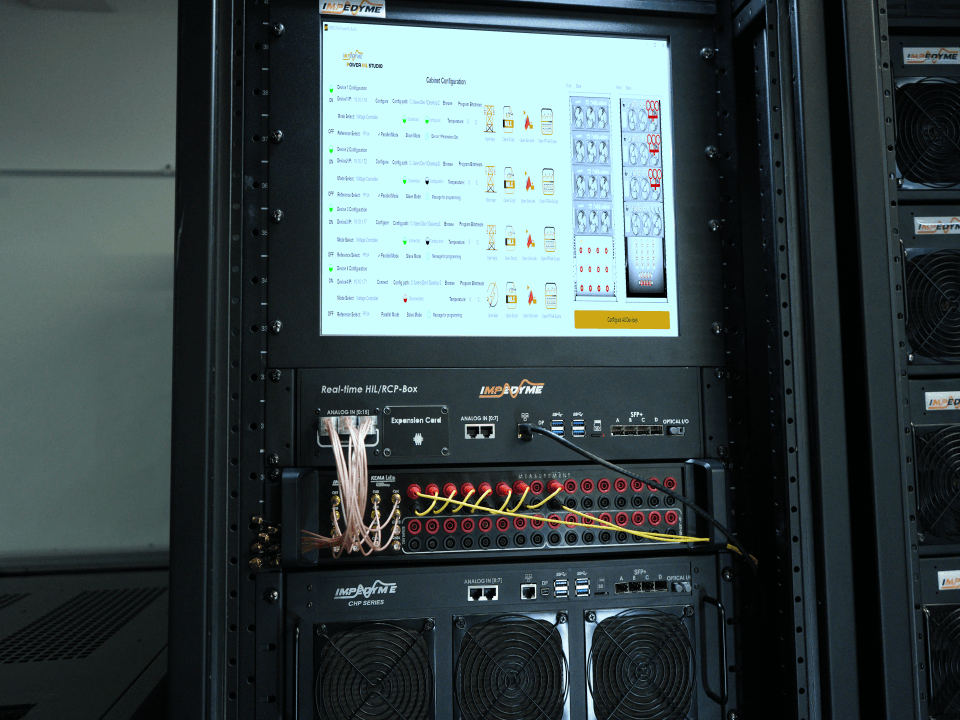
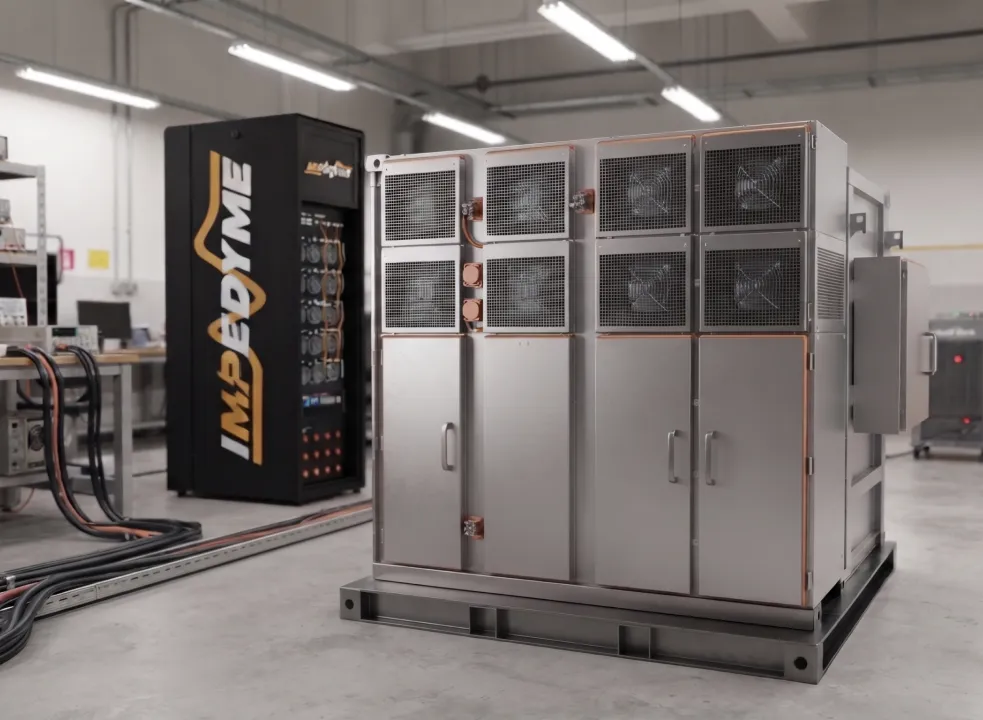
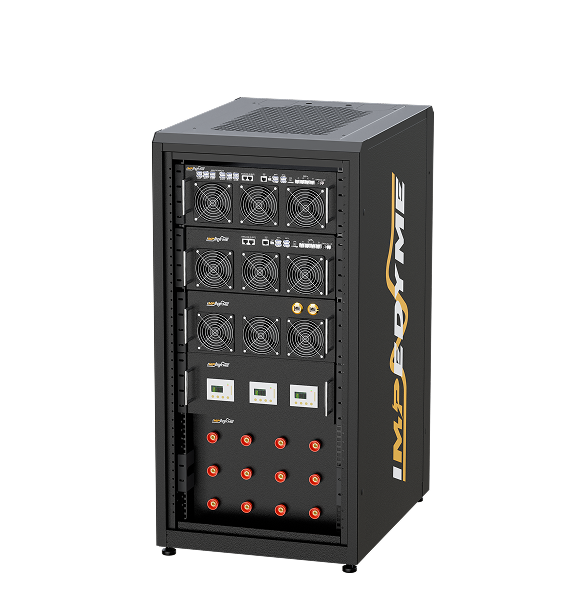
Impedyme’s answer is a simulation-first, regenerative test platform that brings together a Real-time Grid Emulator as the AC source, a Real-time AC/DC Load on the DC output, and an FPGA Scope for simultaneous power analysis — all operating in a closed regenerative loop.
The Impedyme Grid Emulator replaces the utility supply with a fully programmable, real-time AC source. It replicates any global grid standard the Powershelf will encounter in the field:
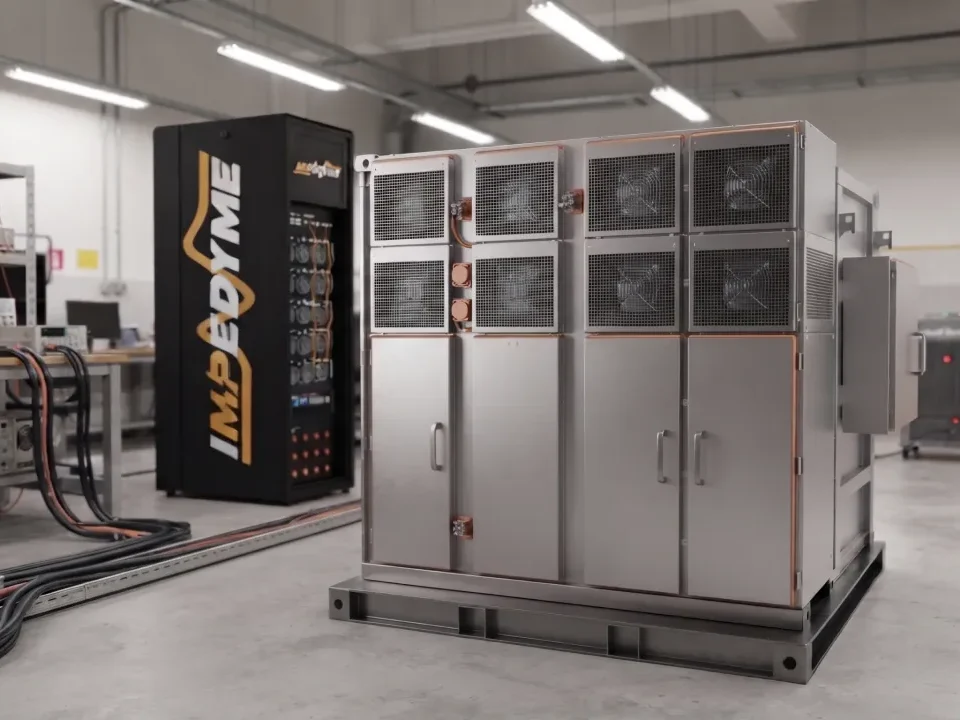
On the DC output side, the Impedyme Real-time AC/DC Load dynamically absorbs and returns power across the full Powershelf output voltage range:
At the heart of the measurement chain is Impedyme’s FPGA-based scope, which monitors both the input and output terminals simultaneously:
Efficiency is not a single number — it is a surface. The regenerative test platform enables engineers to map Powershelf efficiency across every combination of input voltage, output voltage, load level, and temperature. Peak efficiency, part-load efficiency, and the shape of the efficiency curve under dynamic loading can all be characterized with precision. This data drives design optimization and directly informs energy consumption predictions for the deployed facility.
Modern data centers are required to meet strict power quality standards. The test platform validates:
The AC/DC Load exercises the Powershelf output regulation loop under conditions that passive resistive loads cannot replicate:
With the Grid Emulator’s fault injection capability, protection responses can be verified without risk to personnel or equipment:
A distinctive feature of this test platform is its fully regenerative power flow. Power delivered by the Grid Emulator to the Powershelf input is converted to DC and absorbed by the AC/DC Load — which then returns that energy back through the system. The net energy drawn from the utility supply covers only the conversion losses within the loop.
For a Powershelf with 94% efficiency under test, the regenerative architecture means that a 100 kW test consumes only approximately 6 kW from the wall. This has significant practical implications:
Early in the design cycle, the platform gives engineers visibility into efficiency, power quality, and stability performance before hardware is committed to production tooling. Simulation of worst-case grid conditions — weak grids, harmonic-rich inputs, severe voltage imbalance — reveals design margins and identifies the need for protection or filter enhancements while changes are still inexpensive.
Before formal regulatory submissions, the platform allows engineers to run pre-compliance sweeps against IEC, UL, and regional power quality standards. Issues are identified and corrected in-house rather than at a third-party lab, reducing costly re-test cycles.
The closed-loop architecture is well-suited to production line testing, where every unit must be verified against efficiency and output regulation specifications within a defined cycle time. The regenerative design keeps per-unit test energy costs low even at scale.
When Powershelf units return from the field with reported failures, the platform can recreate the exact grid conditions and load profiles that preceded the event — enabling root-cause analysis that would be impossible with a static test setup.
The combination of Impedyme’s Real-time Grid Emulator, Real-time AC/DC Load, and FPGA Scope creates a complete, closed-loop Powershelf test environment that mirrors real data center operating conditions with high fidelity. The regenerative architecture eliminates the energy waste of traditional test setups, while real-time programmability ensures that every relevant grid condition, output voltage, and load profile can be characterized efficiently.
For data center equipment manufacturers and hyperscale operators who need to validate Powershelf performance before deployment, this platform delivers the certainty that conventional test approaches cannot provide: that the Powershelf has been tested against the actual electrical environment it will face in production — and passed
兆瓦级保真度确保在 Impedyme 完成验证的组网型资源在真实可再生或混合电网环境中保持一致表现。通过 结合功率级真实性、, 实时控制与 通信协同验证,PHIL 平台为工程师提供了一个可用于认证、优化与增强系统 韧 性的端到端环境。
对于以逆变器为主的下一代电力系统,这种级别的保真度不是可选项,而是基础要求。 Impedyme 的 Power-HIL 平台展示了高精度、 高可重复性与高功率测试 如何跨越仿真与现实之间的鸿沟, 使产业合作伙伴能够实现 更智能、更稳定、更可靠的组网型解决方案。
通过 精度测量系统的结合 深入验证,对全球清洁能源转型具有关键意义。随着可再生能源渗透率提升、系统惯量下降,电网运营商必须依赖通过验证的 GFM 资源来:
Impedyme 未来将继续拓展 PHIL 在组网型系统中的应用 范围,目标包括 34.5 kV 及以上电压等级、更复杂的 AC/DC 混合系统、以及对氢能储能与电转气技术的扩展验证。
Impedyme 的兆瓦级 PHIL 平台代表了当代电网验证研究的领先水平。通过实时数字仿真、功率硬件集成与高 精度测量系统的结合 ,它为组网型控制及混合可再生系统的验证提供了无与伦比的环境。随着全球能源系统迈向 100% 可再生化运行,此类高保真、硬件级验证平台将成为确保电网稳定性、可靠性与行业信心的关键基础。